
How to Choose a LASIK Center and LASIK Surgeon?
Choose the best LASIK centre and surgeon by checking certifications, experience, technology, patient reviews, safety standards, and post-op care.
Medically Reviewed By:
Dr Advaith Sai Alampur
Leading LASIK & Refractive Surgery Expert
Condition:
Myopia
(Near sightedness)
Treatment:
LASIK
(Laser Eye Surgery)

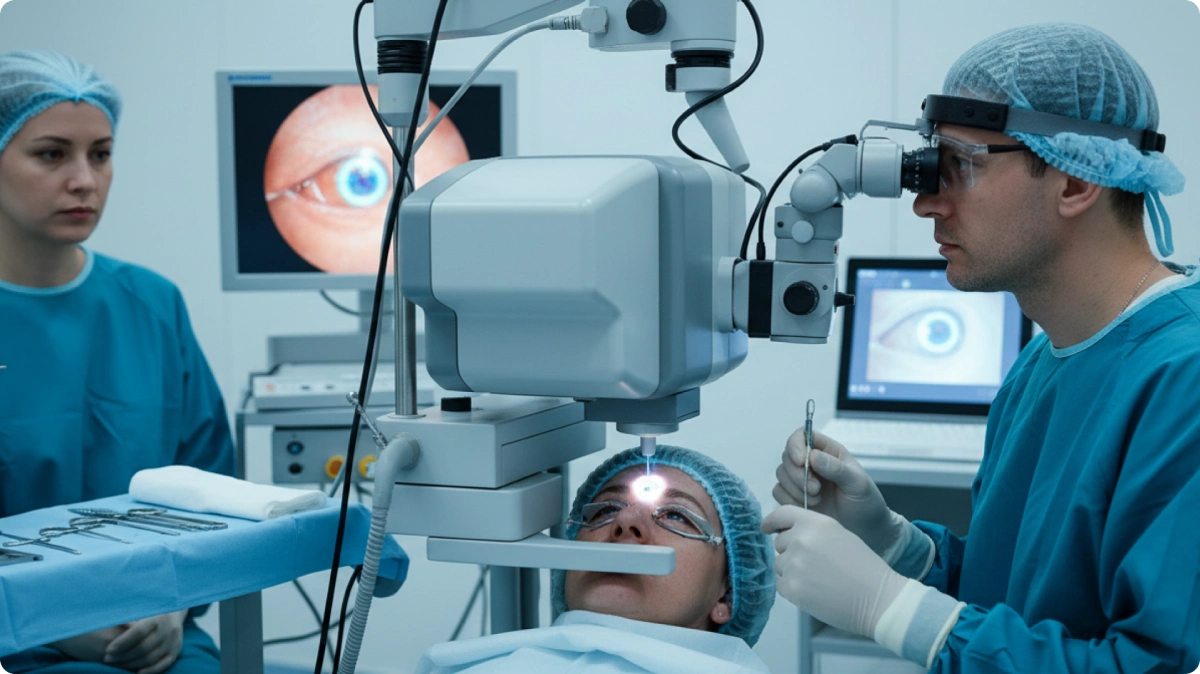
If you’re considering LASIK to improve your vision, choosing the right centre and surgeon is crucial.
Your choice can make all the difference between achieving crystal-clear vision or facing complications that could have been avoided.
Here’s a step-by-step guide to help you confidently select the best LASIK centre and surgeon while addressing all your doubts.
In this article
- LASIK reshapes the cornea to correct nearsightedness, farsightedness, and astigmatism.
- The procedure is FDA-approved, safe, and uses modern laser technology for precision.
- Candidates should be over 18, have a stable prescription, and healthy corneas.
- Short-term side effects can include dry eyes, halos, glare, or temporary vision fluctuations.
- Most patients achieve stable, long-term vision improvement and are satisfied with results.
- LASIK doesn’t stop natural age-related changes, so reading glasses may still be needed later.
Why Choosing the Right LASIK Centre and Surgeon is Vital?
LASIK is a life-changing procedure, but like any surgery, its success heavily depends on the expertise of the surgeon and the quality of the facility.
A skilled surgeon with access to advanced technology minimises risks and ensures the best outcome.
Knowing what to look for in both the treatment centre and the surgeon can save you stress, money, and even your vision.




(Put Real times images and shorts of Dr Avdaith Sai Consulting, Operating on Patients)

Watch Patient Journeys

Visit Our Centre
My Personal Experience as a Surgeon
I’ve performed LASIK on thousands of patients over the years, and one thing I’ve observed is that informed patients make better decisions.
A typical consultation begins with questions like, “What’s your experience with LASIK?” and “What’s the success rate?” And I always say, “Don’t hesitate to dig deeper. Your eyes are worth it.” This blog is everything I would tell my own patients to guide them in their decision-making.
Now, let’s break it down step by step.
Are You the Right Candidate for LASIK?
Fill the form & we will tell you if LASIK is right for you. Its Free!
1. Look for Board-Certified Surgeons
The first step in finding the right surgeon is ensuring they’re board-certified. Opt for someone certified by reputable organisations like the UK General Medical Council or the Royal College of Ophthalmologists. Certification guarantees the surgeon has proper training, qualifications, and has met stringent industry standards.
Questions to ask:
Are you a board-certified ophthalmologist?
How many LASIK procedures have you performed?
What to avoid:
Beware of general practitioners or inexperienced surgeons advertising quick, low-cost LASIK procedures. A certified LASIK surgeon specialises in eye surgery with years of hands-on experience.
2. Assess Experience and Track Record
Experience matters when it comes to LASIK. Find out how many LASIK surgeries the doctor has performed and, more importantly, their success rate. An experienced surgeon will have witnessed various complications and know how to handle them effectively.
I’ll share a story from my practice. Years ago, a patient came to me after being turned away by another clinic because of thin corneas. We used an alternative LASIK procedure called ‘SMILE’, designed specifically for her condition. Today, she enjoys perfect vision. That’s how crucial experience is—it enables customised solutions for each patient.
What to investigate:
1.How long has the LASIK centre been operational?
2.What is the surgeon’s complication rate?
3.Does the surgeon specialise in LASIK or handle multiple surgeries? Specialisation ensures focus and expertise.
3. Evaluate the Technology
It’s not just about the surgeon—LASIK technology plays a pivotal role in your results. Centres that invest in advanced equipment typically deliver better and safer outcomes. Ensure the clinic uses FDA-approved and cutting-edge laser systems.
Key technologies to look out for:
1.Wavefront-Guided LASIK: Offers custom treatments by mapping the unique contours of your eye.
2.Femtosecond Laser: Ensures precision in creating the corneal flap, reducing complications.
3.Topography Mapping: Helps determine whether LASIK is even suitable for your eyes.
Ask the centre to explain their technology in detail, and don’t settle for outdated equipment.
Pro tip:
The more advanced the technology, the more expensive the procedure might be. But remember—you’re investing in your vision. Cheap services may come with basic, less accurate equipment, which could compromise safety.
4. Go Through Reviews and Testimonials
Patient reviews offer insights you can’t get from the clinic’s marketing material. Spend time reading verified reviews on platforms like Trustpilot or Google Reviews.
Red flags to watch for:
1.Consistent reports of poor post-operative care or complications.
2.Overly aggressive sales tactics—trustworthy centres educate you; they don’t force you.
Bonus tip from my clinic:
Request to speak to past patients who have undergone LASIK at the same centre. There’s nothing like hearing their experiences first-hand.
5. Ask About Costs and Financing Options
LASIK isn’t cheap, but it’s worth every penny. The cost usually varies based on the surgeon’s expertise, location, and equipment used.
Don’t fall for cut-rate deals. A seemingly attractive £500 deal might skip crucial pre-op assessments or involve inexperienced practitioners.
What to ask:
1.Is the quoted cost all-inclusive (pre-op tests, follow-ups, post-op medication)?
2.Are financing options available? Some centres offer interest-free instalments.
3.Will enhancements be covered in case of suboptimal outcomes?
Transparency is key. Steer clear of centres hesitant to provide detailed answers about pricing.
6. Prioritise Safety and Hygiene Standards
A good LASIK centre maintains stringent cleanliness and follows strict safety protocols. Ask for a tour of the facility to assess its environment.
Points to check:
1.Use of disposable instruments or tools sterilised between procedures.
2.Fully equipped exam rooms and surgery areas.
3.Compliance with local health regulations.
When a patient once asked me this during a consultation, I happily offered a walk-through of our clinic. Transparency should never be compromised. If a centre is unwilling to demonstrate its hygiene standards, consider it a red flag.
7. Understanding Post-Operative Support
LASIK isn’t over when the surgery is complete. Reliable centres provide robust post-op care, ensuring your recovery is smooth and worry-free.
What post-op care should include:
1.Regular follow-up schedules within 24 hours, one week, and one month after surgery.
2.Availability of 24/7 emergency assistance for issues like pain or vision blurring.
3.A clear recovery plan, including medication and restrictions.
When I operated on a patient in her late 40s, her biggest concern was managing her itchy, sensitive eyes after LASIK. Detailed post-op instructions and a reassuring follow-up call helped her recover seamlessly. Ensure your centre provides this level of care.
8. Consider Proximity and Accessibility
While it’s tempting to seek the best LASIK centre abroad or far from home, convenience matters, especially during the recovery phase. You’ll need to visit the clinic multiple times for follow-ups, and proximity makes these visits less stressful.
Travel considerations:
If you must travel, ensure the centre offers virtual follow-up appointments or has partners in your city to handle aftercare.
9. Trust Your Gut Feeling
Your intuition is a powerful tool. If you feel rushed, unimportant, or uncertain after speaking with a surgeon or touring a facility, don’t ignore those instincts. A trustworthy lasik centre will make you feel comfortable and informed every step of the way.
10. Be Patient—Don’t Rush the Decision
Though LASIK promises life-changing results, it’s not something to rush into. Researching thoroughly and consulting multiple surgeons might take time, but it ensures you make the right choice.
If you’re unsure, keep asking questions. A genuine surgeon—like myself—will never pressure you into quick decisions. Your eyes deserve the best care possible.
Take your time, ask your questions, and when you’re ready, consider booking a consultation—it’s simply a conversation to explore your options without any pressure.
Final Thoughts
Choosing the right LASIK centre and surgeon is about balancing expertise, technology, and patient care.
Start by verifying certifications, assess technology, and prioritise hygiene and post-op support. Go where you feel confident and supported, not pressured.
Remember, LASIK is more than a procedure—it’s a lifelong investment in your vision. Take your time, ask plenty of questions, and choose a provider that puts your needs first.
If you’re ready to begin this exciting chapter, schedule consultations with a few reputable centres in your area—and go from there. Here’s to clearer, brighter days ahead!
LASIK for Pilots in India: A Guide to Vision Standards & Safety
LASIK for pilots in India: DGCA rules, Armed Forces standard…
AI in LASIK Surgery: How Artificial Intelligence Is Transforming Vision Correction (2026)
SMILE Pro preserves 80% more corneal nerves than LASIK by us…
Environmental Factors and LASIK Outcomes: How Pollution and UV Exposure Influence Success and Longevity
Learn how pollution and UV exposure affect LASIK outcomes, h…