
AI in LASIK Surgery: How Artificial Intelligence Is Transforming Vision Correction (2026)
Discover how AI is revolutionizing LASIK surgery in 2026—from advanced diagnostics and laser precision to personalized post-operative care. Learn how artificial intelligence improves safety, accuracy, and long-term vision outcomes.
Medically Reviewed By:
Dr Advaith Sai Alampur
Leading LASIK & Refractive Surgery Expert
Condition:
Myopia
(Near sightedness)
Treatment:
LASIK
(Laser Eye Surgery)

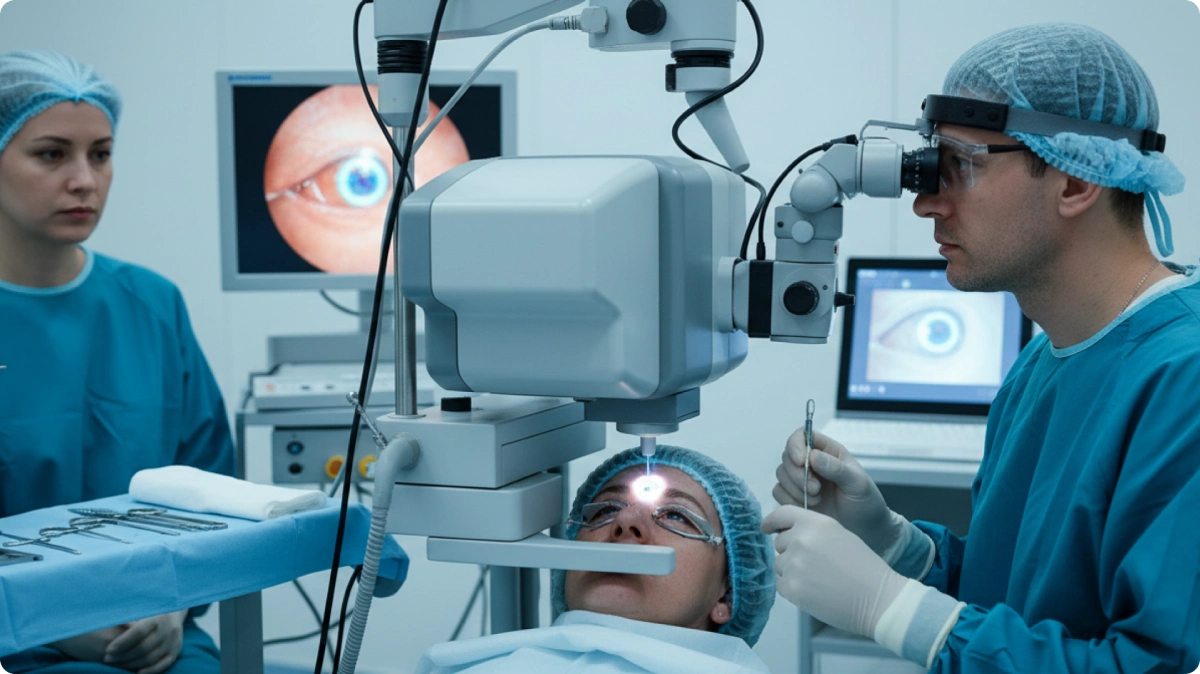
LASIK surgery has long been a beacon of hope for those seeking freedom from glasses and contact lenses in the rapidly evolving field of vision correction.
As we step into 2026, the integration of artificial intelligence (AI) into LASIK procedures is transforming the landscape of eye care, enhancing precision, safety, and patient outcomes.
This blog explores how AI is being integrated into LASIK, from pre-surgery diagnostics to post-surgery care, revolutionizing the patient experience.
In this article
- LASIK reshapes the cornea to correct nearsightedness, farsightedness, and astigmatism.
- The procedure is FDA-approved, safe, and uses modern laser technology for precision.
- Candidates should be over 18, have a stable prescription, and healthy corneas.
- Short-term side effects can include dry eyes, halos, glare, or temporary vision fluctuations.
- Most patients achieve stable, long-term vision improvement and are satisfied with results.
- LASIK doesn’t stop natural age-related changes, so reading glasses may still be needed later.
AI in Pre-Surgery Diagnostics
The journey to clearer vision begins with accurate diagnostics. AI-driven tools are now at the forefront of pre-surgery assessments, providing unparalleled insights into a patient’s eye health.
Advanced imaging technologies, powered by AI algorithms, offer detailed maps of the cornea. These high-resolution images help in identifying minute irregularities and variations that were previously undetectable.
For instance, AI can analyze data from corneal topography to predict the best treatment plan, ensuring a higher success rate.
Machine learning models can assess thousands of cases to determine the most effective approach for each patient, reducing the margin of error and increasing the precision of the surgery.




(Put Real times images and shorts of Dr Avdaith Sai Consulting, Operating on Patients)

Watch Patient Journeys

Visit Our Centre
Enhancing Precision During Surgery
During the LASIK procedure itself, AI plays a crucial role in guiding the laser for corneal reshaping.
Traditional methods rely heavily on the surgeon’s skill and experience, but AI-assisted systems provide real-time feedback, making micro-adjustments to ensure optimal accuracy.
These AI systems can track eye movements with incredible speed and precision, adjusting the laser’s position to compensate for any involuntary movements.
This reduces the risk of complications and enhances the overall outcome of the surgery. Additionally, AI can optimize the laser’s energy levels and pulse duration, tailored to each patient’s unique corneal structure.
Are You the Right Candidate for LASIK?
Fill the form & we will tell you if LASIK is right for you. Its Free!
Post-Surgery Care and Monitoring
The integration of AI extends beyond the operating room into post-surgery care, significantly improving recovery and long-term results.
AI-powered applications and wearables can monitor patients’ recovery in real time, alerting both the patient and the surgeon to any anomalies that may require attention.
For example, AI can analyze data from follow-up exams to detect early signs of complications such as dry eye or infection, allowing for prompt intervention.
Personalized post-operative care plans can be generated based on AI analysis, ensuring that each patient receives the most effective care for their specific needs.
Improving Patient Experience
The integration of AI in LASIK procedures not only enhances medical outcomes but also significantly improves the overall patient experience.
Pre-surgery, patients can benefit from AI-driven simulations that provide a realistic preview of their expected vision post-surgery, helping to set realistic expectations.
During the surgery, the reduced risk of complications and increased precision offer peace of mind.
Post-surgery, continuous monitoring and personalized care plans ensure a smooth recovery, minimizing discomfort and enhancing satisfaction.
The Future of LASIK and AI
As AI technology continues to advance, its role in LASIK surgery is expected to grow even more significant.
Future developments may include AI-driven robotic surgery, where AI systems perform the procedure with minimal human intervention, further reducing the risk of human error.
In conclusion, the integration of AI into LASIK procedures marks a new era in vision correction.
From enhancing diagnostics and surgical precision to improving post-surgery care and patient experience, AI is set to revolutionise the field, making clearer vision more attainable and safer than ever before.
As we embrace these technological advancements, the future of LASIK surgery looks brighter—and clearer—than ever.
Why Is SMILE Pro the Safest Laser Eye Surgery for Police and Military Aspirants in India?
Unlike LASIK, which creates a corneal flap that poses a life…

Flap Dislocation: Real-World Risks for Athletes and Contact Sports Players
Concerned about LASIK flap dislocation during sports? Learn …
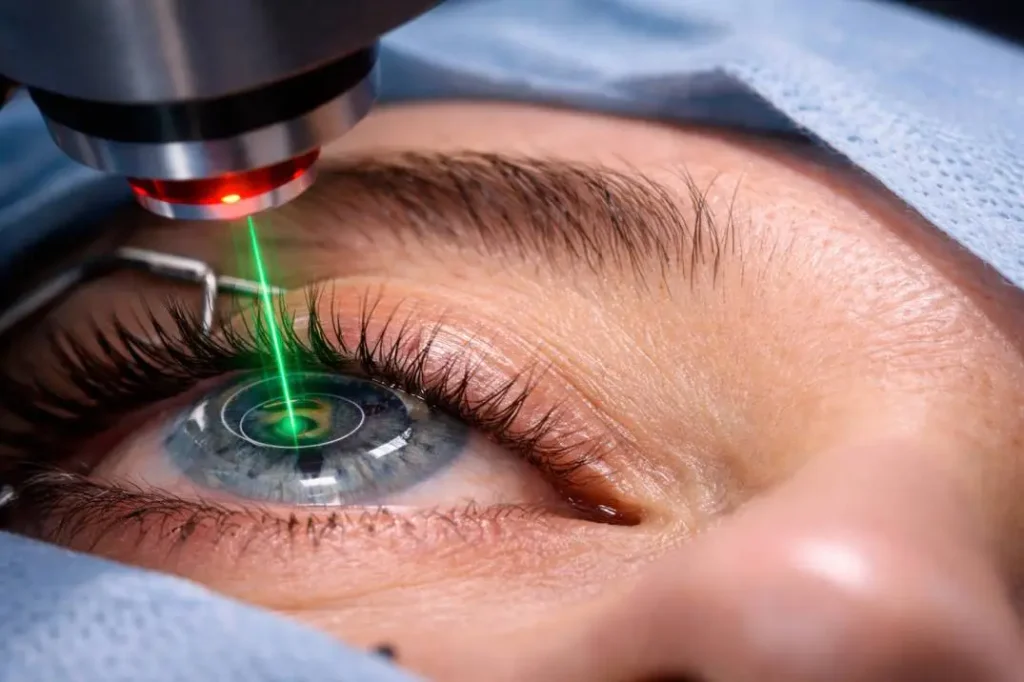
What Happens If I Blink During the SMILE Pro 10-Second Laser?
Dr. Advaith Alampur explains why you can’t blink during the …