
Flap Dislocation: Real-World Risks for Athletes and Contact Sports Players
Concerned about LASIK flap dislocation during sports? Learn the real risks for athletes, why SMILE Pro and PRK are safer flapless alternatives, and how to protect your vision after laser eye surgery.
Medically Reviewed By:
Dr Advaith Sai Alampur
Leading LASIK & Refractive Surgery Expert
Condition:
Myopia
(Near sightedness)
Treatment:
LASIK
(Laser Eye Surgery)

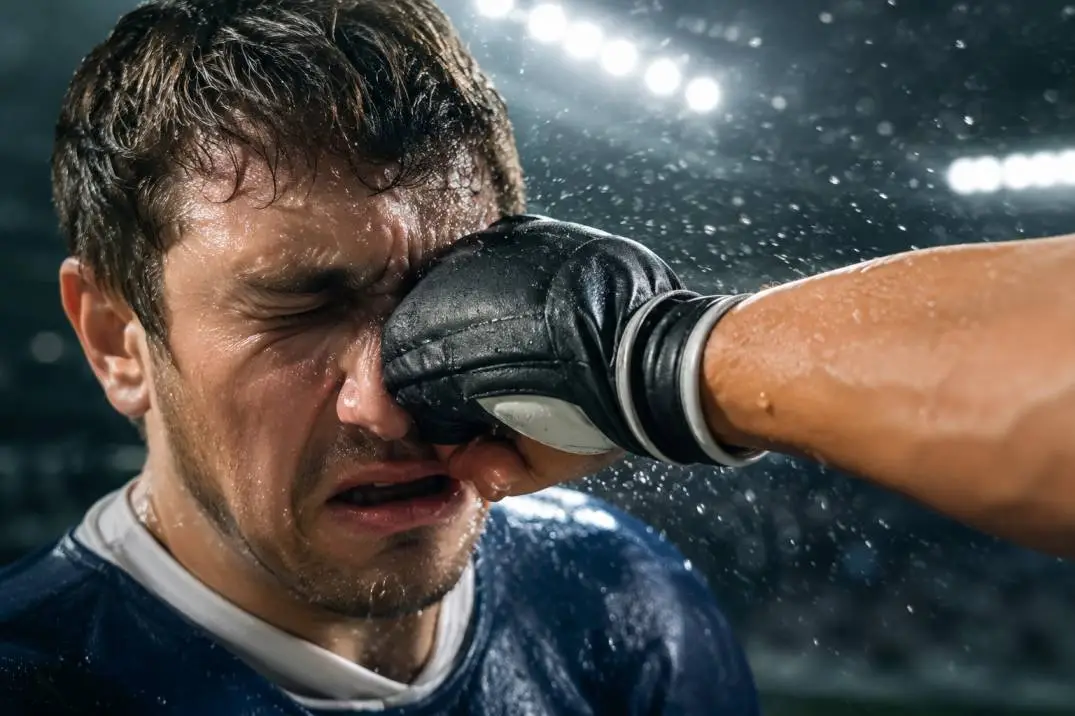
For professional athletes, weekend warriors, and martial arts enthusiasts, the dream of perfect vision often comes with a specific, gnawing anxiety: "Can a punch, a ball, or an elbow to the face dislodge my LASIK flap?"
The direct, medical answer is yes.
While the LASIK flap heals securely enough for daily life within 24 hours, its tensile strength never returns to 100% of the original uncut cornea.
The interface between the flap and the underlying stromal bed remains a potential plane of separation indefinitely.
For high-impact athletes involved in boxing, MMA, rugby, or even aggressive basketball, a direct, shearing force to the eye can cause traumatic flap dislocation years after the original surgery.
For this specific demographic, flap-based procedures like LASIK are often contraindicated in favour of flapless alternatives like SMILE Pro or PRK, which leave the anterior corneal structural integrity intact.
Quick Summary
1.The Lifetime Risk: A LASIK flap heals at the edges (epithelium) but does not re-integrate fully in the centre. This means a traumatic "shearing" force can lift or wrinkle the flap even 10 years post-surgery.
2.The Mechanism of Injury: Direct blunt trauma (like a tennis ball) usually bruises the eye, but a tangential force (like a fingernail or an open glove) is what peels back the flap.
3.Why SMILE Pro is Safer: SMILE Pro is flapless. It involves a keyhole incision that heals rapidly and restores close to 100% of the cornea's original tensile strength. It is mechanically impossible to dislocate a SMILE lenticule cap.
4.PRK for Combat Sports: PRK removes the epithelium entirely, which grows back as a solid sheet. Once healed, there is no flap to move. It is the gold standard for boxers and MMA fighters.
5.Immediate Action: If you suffer eye trauma after LASIK and vision blurs instantly, it is an ocular emergency. Immediate repositioning can save the flap, but delay can lead to striae (wrinkles) or epithelial ingrowth.
In this article
- LASIK reshapes the cornea to correct nearsightedness, farsightedness, and astigmatism.
- The procedure is FDA-approved, safe, and uses modern laser technology for precision.
- Candidates should be over 18, have a stable prescription, and healthy corneas.
- Short-term side effects can include dry eyes, halos, glare, or temporary vision fluctuations.
- Most patients achieve stable, long-term vision improvement and are satisfied with results.
- LASIK doesn’t stop natural age-related changes, so reading glasses may still be needed later.
Why Does a Flap Never Fully Heal After LASIK?
To understand the risk, you must understand the architecture of LASIK. In my practice at Envision LASIK Centre, I often use the analogy of a "manhole cover" versus a "solid road."
The LASIK Flap Construction:
- We use a femtosecond laser to create a circular flap, typically 100 \text{-- 110 \mu m thick.
- The laser leaves a small "hinge" (usually superior or nasal) to keep the flap attached.
- We lift this tissue, ablate the bed underneath, and lay it back down.
The Healing Limitation:
The healing process is predominantly epithelial. The cells on the surface bridge the gap at the edge of the cut within hours, sealing the eye.
However, the stromal interface (the flat area under the flap) does not form strong collagen cross-links with the bed. It relies on osmotic pressure (suction from the endothelial pump) and glycosaminoglycans (sticky proteins) to stay in place.
While the flap is very secure against blinking, rubbing, or swimming, it lacks shear strength. Studies have shown that the force required to lift a flap years after surgery is significantly less than the force required to tear intact corneal tissue.
Essentially, the plane of the cut remains a permanent "weak spot" in the eye's architecture.




(Put Real times images and shorts of Dr Avdaith Sai Consulting, Operating on Patients)

Watch Patient Journeys

Visit Our Centre
Can a LASIK Flap Be Dislodged Years Later? Understanding Displacement Risks
Patients often ask, "Doctor, if I get hit with a cricket ball, will the flap move?"
Surprisingly, blunt force trauma usually doesn't move the flap. A direct impact compresses the eye. While this can cause other damage (like retinal detachment or hyphema), the flap usually stays put because the force is perpendicular.
The Real Danger: Shearing Force
Flap dislocation is caused by tangential or shearing forces—something moving across the surface of the eye.
The Finger Poke: In basketball or wrestling, a finger sliding across the open eye is the classic mechanism. The fingernail catches the edge of the flap and peels it back.
The Airbag: In a car accident, the deploying airbag can brush across the face with immense speed, creating enough friction to dislodge the flap.
The Tree Branch: For hikers or trail runners, a branch whipping across the face can act as a wedge.
When the flap dislocates, it folds over like a wrinkled rug. This causes:
- Immediate, massive drop in vision (often to "counting fingers" level).
- Severe pain and foreign body sensation.
- Exposure of the underlying nerve-rich stroma.
Are You the Right Candidate for LASIK?
Fill the form & we will tell you if LASIK is right for you. Its Free!
Is SMILE Pro or PRK Better for High-Impact Sports and Combat?
For my patients who are active in high-risk environments—whether they are professional MMA fighters, police officers, or avid rugby players—I almost universally steer them away from LASIK. The risk is low, but the consequence is high. Instead, we look at SMILE Pro or PRK.
1.SMILE Pro (Small Incision Lenticule Extraction)
SMILE Pro is a game-changer for athletes because it is fundamentally flapless.
- The Architecture: We create a lenticule (a disc of tissue) inside the cornea and remove it through a tiny 2 \text{-- 4 mm side incision.
- The Strength: The anterior stroma (the strongest part of the cornea) remains 90% intact.
- The Result: There is no "lid" to lift. You could theoretically rub the eye vigorously or sustain a shearing injury, and while you might scratch the surface, there is no flap to dislocate. The structural integrity is essentially that of a virgin cornea.
2.PRK (Photorefractive Keratectomy)
This is the original laser surgery and remains the gold standard for military special forces and boxers.
- The Architecture: We remove the surface skin (epithelium) and laser the top of the stroma directly.
- The Strength: The epithelium grows back as a single, solid sheet, anchoring itself firmly to the stroma via hemidesmosomes.
- The Result: Once healed (after 3-6 months), the cornea is a solid block of tissue. There is absolutely no plane of separation.
SMILE vs. PRK: Which Eye Surgery is Safest for Contact Sports?
Not all sports carry the same risk. Here is how I categorise risk for my patients in Hyderabad:
| Sport / Activity | Risk Level | Recommended Procedure | Why? |
| Running, Gym, Swimming | Low | LASIK, SMILE Pro, or PRK | Non-contact. Flap dislocation risk is negligible. |
| Cricket, Tennis, Badminton | Moderate | SMILE Pro or LASIK | Risk is mostly blunt trauma (ball impact), not shearing. Protective eyewear is recommended regardless. |
| Football, Basketball | High | SMILE Pro | Accidental fingers/elbows to the face are common. Flaps are a liability. |
| Boxing, MMA, Wrestling | Severe | PRK or SMILE Pro | Direct, intentional trauma to the face. LASIK is absolutely contraindicated. |
| Military / Police | Severe | SMILE Pro or PRK | Unpredictable physical altercations require maximum structural integrity. |
The "Recovery vs. Safety" Trade-off:
- LASIK: Fast recovery (24 hours), lower safety for contact sports.
- SMILE Pro: Fast recovery (24-48 hours), high safety. (The "Sweet Spot" for most athletes).
- PRK: Slow recovery (5-7 days pain, weeks for clarity), maximum safety.
What Happens If My LASIK Flap Dislocates? Can It Be Fixed?
I believe in preparing patients for the worst-case scenario. If you have had LASIK and suffer a flap dislocation, here is the protocol.
Immediate Symptoms:
- Sudden, profound blur in one eye.
- It feels like there is a rock under your eyelid (the folded flap is bulky).
- Watering and light sensitivity.
The Action Plan:
- Do NOT Rub: Rubbing will crumble the flap further, potentially damaging the hinge.
- Tape a Shield: Tape a plastic cup or shield over the eye to prevent blinking pressure.
- Emergency Visit: This is not a "wait until Monday" situation. You need to see a corneal surgeon immediately.
The Repair Surgery:
- We take you back to the sterile operating theatre.
- We lift the flap, which may be swollen and wrinkled.
- We irrigate the interface to remove any epithelial cells or debris.
- We "iron out" the flap using specialised instruments to remove striae (wrinkles).
- We place a bandage contact lens to hold it in place while it re-adheres.
Prognosis:
If treated within 24 hours, visual recovery is usually excellent. However, if delayed, the flap can develop fixed folds (striae) that permanently distort vision, or epithelial ingrowth, where skin cells grow under the flap, requiring difficult secondary surgeries.
Clinical Insights: Real Stories from the Sports Field
In Hyderabad, sports culture is growing, and with it, the specific demands on refractive surgery.
Case Study 1: The Weekend Cricketer
A 35-year-old corporate executive played competitive cricket on weekends. He had LASIK 4 years prior at another clinic.
- The Incident: He missed a catch, and the ball grazed his cheekbone and eye. He felt a "pop" and his vision went white.
- The Injury: He arrived at Envision with a traumatic flap dislocation. The flap was folded back on itself like a taco.
- The Outcome: Because he came in within 2 hours, I was able to refloat and reposition the flap. He recovered 20/20 vision, but I advised him that his flap was now even more vulnerable than before. He now wears protective polycarbonate goggles for every match.
Case Study 2: The MMA Aspirant
A 26-year-old semi-pro fighter came for a consultation. He wanted LASIK because he saw an ad for "24-hour recovery."
- The Consultation: I explained the shearing forces involved in grappling and striking. A single "thumb to the eye" could end his fighting career if he had a flap.
- The Decision: We chose SMILE Pro.
- The Result: Six months later, he took a significant hit to the orbital rim during sparring. His eye was swollen and bruised, but his cornea remained perfectly intact. His vision was unaffected. This validated our choice of a flapless procedure.
Conclusion: Choosing Durability Over Speed
If you live an active life where physical impact is a possibility, your choice of refractive surgery must be dictated by biomechanics, not just marketing.
The risk of flap dislocation is real. It is rare, yes, but for the wrong patient in the wrong sport, it is a ticking time bomb.
In 2026, we are fortunate to have SMILE Pro. It offers the best of both worlds: the rapid visual recovery of LASIK with the biomechanical "tank-like" toughness of PRK. For the modern male athlete—whether you are tackling opponents on a field or just wrestling with your kids—SMILE Pro eliminates the anxiety of the "what if."
At Envision LASIK Centre in Hyderabad, we profile your lifestyle as rigorously as we profile your eyes. If you tell me you play football, box, or serve in the forces, I will not offer you LASIK. I will offer you a solution that can take a hit.
Don't compromise your game or your vision.
Let’s discuss which procedure is tough enough for your lifestyle.
Book Your Athlete-Focused Vision Consultation Today!
Am I a Good Candidate for Laser Eye Surgery in India?
1.Stable Refraction: Your eye power should be stable for at least 1 year before surgery.
2.Corneal Thickness: Sufficient corneal thickness is essential, especially for repeat assessments by defense/aviation medical boards.
3.No Pre-existing Eye Diseases: Diseases such as keratoconus, glaucoma, or retinal conditions may disqualify you.
4.General Health: You must not have systemic conditions that affect healing (such as autoimmune diseases).
5.Age Requirements: For most licensing/entry, at least 18–21 years old, and your eyes should be fully mature.
Always consult an experienced ophthalmologist familiar with DGCA or Armed Forces requirements before proceeding.
Consult Dr. Advaith Sai Alampur, an experienced ophthalmologist in India, who understands the specific vision standards set by the DGCA and Armed Forces.
Get personalized guidance, thorough assessments, and clarity on your eligibility before making a decision.
The Process: From Consultation to Returning to Duty
1.Pre-Surgery Assessment: Full eye check-up and counseling about procedure choice, recovery, and job-specific risks.
2.Procedure: Outpatient surgery, usually under 15 minutes per eye.
Grounding/Non-Operational Period: Compliance with mandatory waiting period (usually 6–12 months post-surgery for aviation and defense).
3.Post-Surgery Monitoring: Multiple follow-ups with documented corneal health, visual acuity, and absence of glare/halos.
4.Final Clearance: Submission of detailed ophthalmic reports to the DGCA or Medical Board. Only after official clearance are individuals allowed to resume flying or operational duties.
How Long After LASIK or PRK Can I Resume Flying or Operational Duties in India?
1.Commercial Pilots (DGCA): Generally, a minimum waiting period of 6–12 months, with mandatory ophthalmic clearance and documented stable vision. Approval is given on a case-by-case basis.
2.Armed Forces: Usually 6–12 months for PRK and surface ablation procedures, subject to thorough assessment. LASIK often remains disqualifying for flying/combat roles.
Key Takeaways
1.Laser Eye Surgery Is Conditioned: Indian aviation and certain defence roles permit laser eye surgery if strict criteria are met.
2.Type of Procedure Matters: Surface ablation (PRK/LASEK) is preferred in military flying roles; LASIK can be accepted in civilian aviation after clearance.
3.Waiting Period Is Mandatory: 6–12 months post-surgery, with full documentation and clearance before resuming operational duties.
4.Declare and Demonstrate: Disclosure and comprehensive ophthalmology reports are required for clearance.
5.Review Updates Regularly: Regulations may change; always check the latest DGCA and Armed Forces guidelines.
Frequently Asked Questions (FAQ)
Q: Can I become a commercial pilot in India after LASIK?
A: Yes, DGCA permits commercial pilots after LASIK, provided post-surgery visual standards are met, and there’s a clear ophthalmic assessment at least 6–12 months after the procedure.
Q: Is LASIK allowed for Indian Air Force or Navy pilot selection?
A: Generally, no. Surface ablation procedures (like PRK) may be considered, but LASIK is typically disqualifying for these streams. Always refer to recent IAF and IN medical advisories.
Q: What about defense technical or ground roles?
A: Many non-flying and technical roles in the Indian Armed Forces now allow previously operated eyes, subject to stable vision and absence of complications.
Q: What disqualifies a candidate after laser vision correction in India?
A: Flap-related issues, unstable refraction, corneal thinning, glare/halos, or any significant complication may lead to disqualification.
Q: Where can I check the latest medical standards?
A: Refer to the latest DGCA medical circulars and official Armed Forces recruitment announcements for verified, up-to-date guidelines.
LASIK for Pilots in India: A Guide to Vision Standards & Safety
LASIK for pilots in India: DGCA rules, Armed Forces standard…
AI in LASIK Surgery: How Artificial Intelligence Is Transforming Vision Correction (2026)
SMILE Pro preserves 80% more corneal nerves than LASIK by us…
Environmental Factors and LASIK Outcomes: How Pollution and UV Exposure Influence Success and Longevity
Learn how pollution and UV exposure affect LASIK outcomes, h…