
Blurry Vision After SMILE Surgery: What You Need to Know
Blurry vision after SMILE surgery is usually temporary and improves as your eyes heal and adjust.

Medically Reviewed By:
Dr Advaith Sai Alampur
Leading LASIK & Refractive Surgery Expert
Condition:
Myopia
(Near sightedness)
Treatment:


You’ve had SMILE surgery, and now you’re super excited to ditch your glasses or contact lenses, but hold on… why is your vision still blurry?
If this sounds familiar, don’t panic! Experiencing blurry vision after SMILE surgery is completely normal and an essential part of the healing process.
Still, it can be unnerving when things don’t feel perfect right away. I get it. That’s why I’ve created this detailed blog with everything you need to know about blurry vision after SMILE surgery.
How long does it last? Is there cause for concern? What can you do to help your eyes heal faster?
By the time you finish reading, you’ll feel reassured and ready to tackle your recovery with confidence.
I’ve also included some insights from experienced doctors and real patient experiences to make this comprehensive yet easy to understand. So, grab a cup of tea, relax, and read on!
In this article
- LASIK reshapes the cornea to correct nearsightedness, farsightedness, and astigmatism.
- The procedure is FDA-approved, safe, and uses modern laser technology for precision.
- Candidates should be over 18, have a stable prescription, and healthy corneas.
- Short-term side effects can include dry eyes, halos, glare, or temporary vision fluctuations.
- Most patients achieve stable, long-term vision improvement and are satisfied with results.
- LASIK doesn’t stop natural age-related changes, so reading glasses may still be needed later.
After SMILE surgery, blurry vision is not only common but also expected.
SMILE (Small Incision Lenticule Extraction) reshapes your cornea to correct refractive errors such as nearsightedness or astigmatism.
This minimally invasive procedure involves a small incision, but your eyes still need time to heal and adapt to their new shape.
What Causes Blurriness?
Blurry vision occurs for several reasons:
1.Initial Swelling of the Cornea: The laser used during SMILE creates a subtle change in your cornea’s structure. Swelling is normal as the tissues heal.
2.Dry Eyes: Surgery temporarily affects your eyes’ ability to produce tears, leading to dryness and blurry vision.
3.Healing Process: The brain and eyes need time to adjust to the new correction, particularly if your prescription was high.
Doctor’s Insight: “One of my patients reached out three days after surgery, worried because she still couldn’t see clearly. I explained that blurry vision is just part of normal recovery and encouraged her to stay patient. Sure enough, by day seven, she was amazed at her results.”




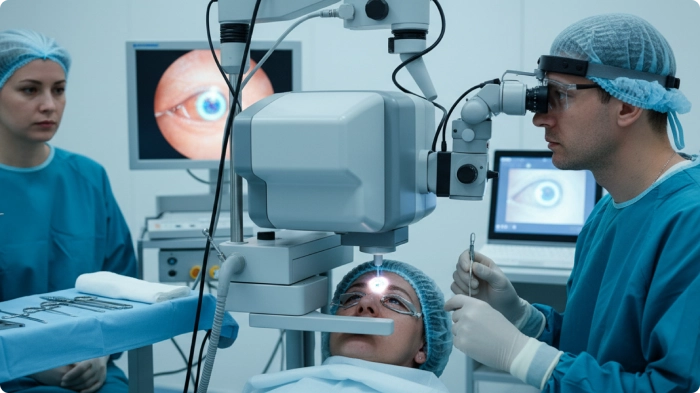
(Put Real times images and shorts of Dr Avdaith Sai Consulting, Operating on Patients)

Watch Patient Journeys

Visit Our Centre
The duration of blurry vision varies depending on individual healing and the severity of your original prescription. Here’s a general timeline:
First 24–48 Hours
Blurry vision is most noticeable immediately after the procedure. While some people see improvement within hours, it’s common for vision to remain hazy initially. During this time, your eyes are adjusting, and rest is crucial.
Day 2-7
Most patients report gradual improvement in vision during the first week. By the end of this period, you’ll likely notice much less blurriness, although night vision (like seeing halos around lights) might still be tricky.
Week 2 and Beyond
At this stage, any residual blurriness should steadily ease. Vision typically becomes sharper over the next few weeks, reaching its peak clarity at around 1–3 months post-surgery.
Important: If your vision doesn’t improve within this timeline, consult your eye surgeon for a check-up. While rare, slight adjustments may sometimes be necessary.
Real Patient Example: “A marathon runner I treated shared that she was frustrated by the blurriness during her first week. But she trusted the process, and by week two, she was thrilled to clock new personal bests without fumbling with contacts!”
Are You the Right Candidate for Smile pro?
Fill the form & we will tell you if LASIK is right for you. Its Free!
When Is Blurry Vision After SMILE Surgery Normal?
While blurry vision is typically harmless, don’t ignore it if you experience these issues:
1.Sudden, significant worsening of vision.
2.Severe pain or discomfort.
3.Persistent blurriness that doesn’t improve after a month.
4.Signs of infection, such as redness or excessive tearing.
Doctor’s Note: “Your eyes are precious, and it’s always better to err on the side of caution. A quick follow-up appointment can offer peace of mind if something feels off.”
Tips to Manage Blurry Vision After SMILE Surgery
Can Blurry Vision Come Back After SMILE Surgery?
SMILE surgery offers long-lasting results, but no procedure can stop the effects of aging. For instance, in your 40s or 50s, you might develop presbyopia (difficulty focusing on close objects) regardless of the initial surgery.
Additionally, the following could contribute to post-surgery blurriness down the line:
- Hormonal changes (e.g., during pregnancy).
- Prolonged eye strain from excessive screen time.
- Underlying conditions like dry eye syndrome.
Important Note: Regular eye exams can help catch and address these issues early.
Personal Story: “I treated a teacher who noticed slight blurriness months after SMILE. We discovered her dry eyes were worsening due to hours of screen use in the classroom. After adjusting her treatment with additional lubricants,
Blurry vision after SMILE surgery can feel inconvenient, but it’s a natural and temporary part of the healing process. Patience, proper care, and following your doctor’s advice can make all the difference in transitioning to clear, unaided vision. Remember:
1.Blurriness in the first few days or weeks is normal.
2.Use eye drops, rest your eyes, and stay hydrated to aid healing.
3.Reach out to your surgeon if you have concerns that persist.
A world of sharp, vivid vision is just around the corner. If you’re feeling uncertain about your progress, don’t hesitate to contact our clinic.
Your eyes are worth the best care possible, and there’s no such thing as asking too many questions.
Take care, and enjoy this exciting chapter of your life!
LASIK for Pilots in India: A Guide to Vision Standards & Safety
LASIK for pilots in India: DGCA rules, Armed Forces standard…
AI in LASIK Surgery: How Artificial Intelligence Is Transforming Vision Correction (2026)
SMILE Pro preserves 80% more corneal nerves than LASIK by us…
Environmental Factors and LASIK Outcomes: How Pollution and UV Exposure Influence Success and Longevity
Learn how pollution and UV exposure affect LASIK outcomes, h…