
Why is Wavelight Plus the Best Treatment for Patients with Irregular Astigmatism?
Discover why Wavelight Plus is ideal for irregular astigmatism—advanced mapping corrects corneal irregularities for sharper, clearer vision.
Medically Reviewed By:
Dr Advaith Sai Alampur
Leading LASIK & Refractive Surgery Expert
Condition:
Treatment:

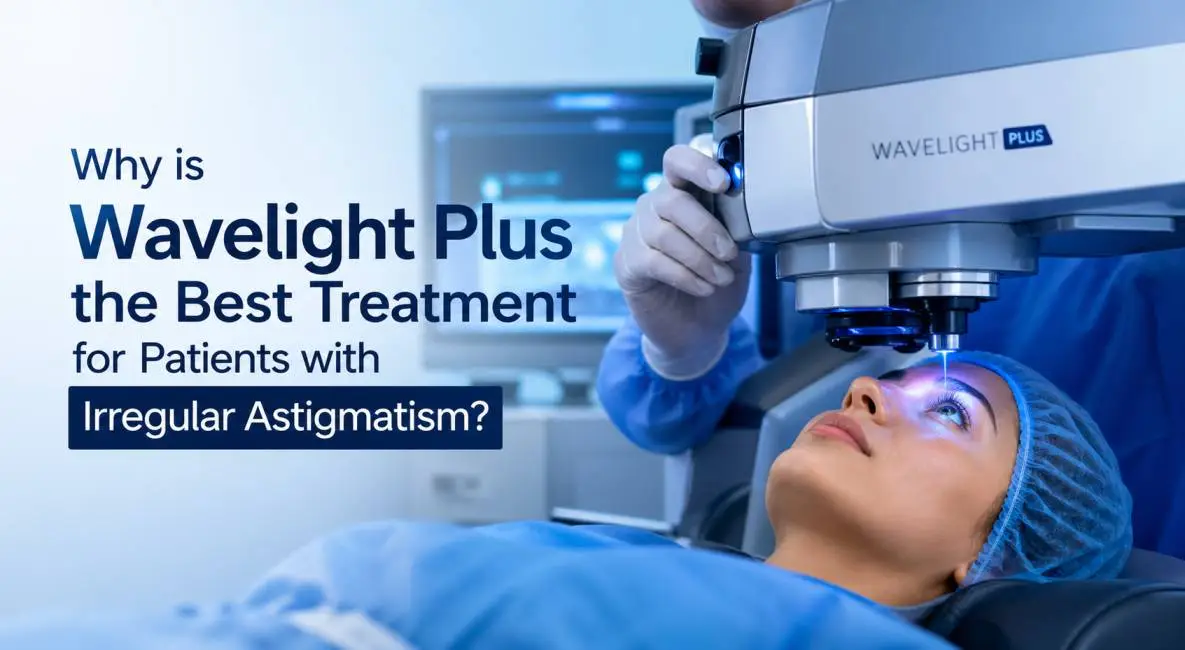
For patients with irregular astigmatism, standard vision correction often falls short, leaving them with persistent glare, halos, and ghosting.
The Wavelight Plus system is the best treatment for this condition because it moves beyond a simple prescription.
It is a topography-guided platform that maps and corrects the cornea's unique, irregular surface with unparalleled precision.
By measuring 22,000 individual points on the cornea, it creates a personalised ablation profile that smooths out the microscopic hills and valleys causing the distorted vision, something no other laser platform or eyeglass prescription can achieve.
This ability to normalise the corneal surface, rather than just treating the refractive error, is why it consistently delivers superior visual quality and clarity for these complex cases.
In this article
- LASIK reshapes the cornea to correct nearsightedness, farsightedness, and astigmatism.
- The procedure is FDA-approved, safe, and uses modern laser technology for precision.
- Candidates should be over 18, have a stable prescription, and healthy corneas.
- Short-term side effects can include dry eyes, halos, glare, or temporary vision fluctuations.
- Most patients achieve stable, long-term vision improvement and are satisfied with results.
- LASIK doesn’t stop natural age-related changes, so reading glasses may still be needed later.
Quick Summary
1.Beyond Prescription: Wavelight Plus doesn't just treat your spectacle power; it treats your cornea's unique shape, correcting the root cause of visual distortions in irregular astigmatism.
2.Unmatched Precision: By mapping 22,000 data points, the system creates a highly individualised treatment plan that smooths the corneal surface, reducing higher-order aberrations like glare and halos.
3.Superior Visual Outcomes: Clinical studies and real-world results show that topography-guided treatment with Wavelight Plus often results in vision that is sharper and clearer than what was previously achievable with glasses or contacts.
4.The Gold Standard: For patients with asymmetric or irregular astigmatism who are candidates for laser vision correction, Contoura Vision powered by Wavelight Plus is considered the gold standard for achieving the best possible visual quality.



(Put Real times images and shorts of Dr Avdaith Sai Consulting, Operating on Patients)

Watch Patient Journeys

Visit Our Centre
What Is Irregular Astigmatism and Why Is It So Hard to Treat?
In my decade of practice as a corneal surgeon, one of the most challenging conditions I treat is irregular astigmatism.
To understand why, we first need to define regular astigmatism.
Think of a normal cornea as being shaped like a perfect basketball.
In regular astigmatism, the cornea is shaped more like a rugby ball—uniformly curved in one direction and steeper in another.
This is easily corrected with glasses, contact lenses, or standard LASIK, as the shape is predictable.
Irregular astigmatism is different. The cornea is not a smooth rugby ball; it's more like a warped, dented surface.
It has multiple, asymmetric peaks and valleys.
This irregularity scatters light in many directions, causing a host of frustrating visual symptoms that go far beyond simple blurriness:
1.Ghosting or Double Vision: Seeing multiple overlapping images.
2.Glare and Starbursts: Significant light streaks, especially from headlights at night.
3.Poor Contrast: Difficulty seeing in dim light or distinguishing between similar shades.
4.Distorted Lines: Straight lines may appear wavy or tilted.
The fundamental problem is that eyeglasses and standard contact lenses can only correct for the two primary meridians of a rugby ball shape.
They cannot correct for the dozens of microscopic, irregular bumps on the corneal surface.
This is why even with the "best" prescription, patients with irregular astigmatism often report that their vision still isn't "sharp".
Are You the Right Candidate for LASIK?
Fill the form & we will tell you if LASIK is right for you. Its Free!
How Does the Wavelight Plus Work Its Magic in Astigmatism?
The Wavelight Plus platform, which drives the Contoura Vision procedure, is a revolutionary technology because it addresses the problem at its source.
Instead of just focusing on the prescription, it focuses on the cornea's topography.
The Topolyzer Vario: The Cartographer of the Cornea
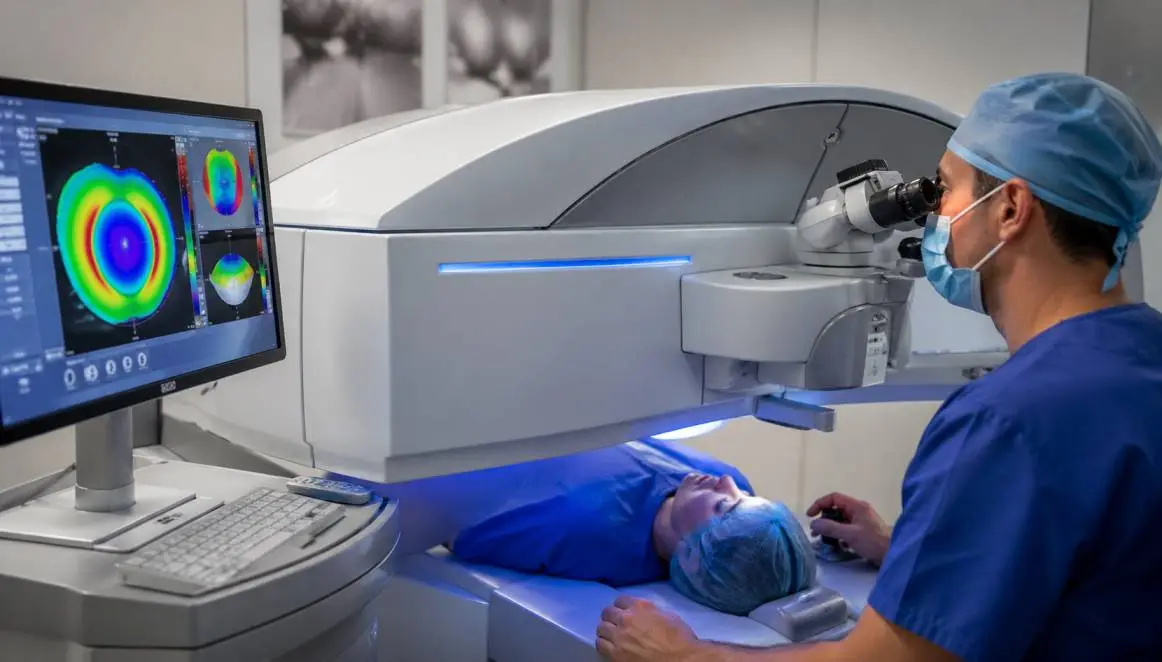
The process begins with an advanced diagnostic device called the Topolyzer VARIO.
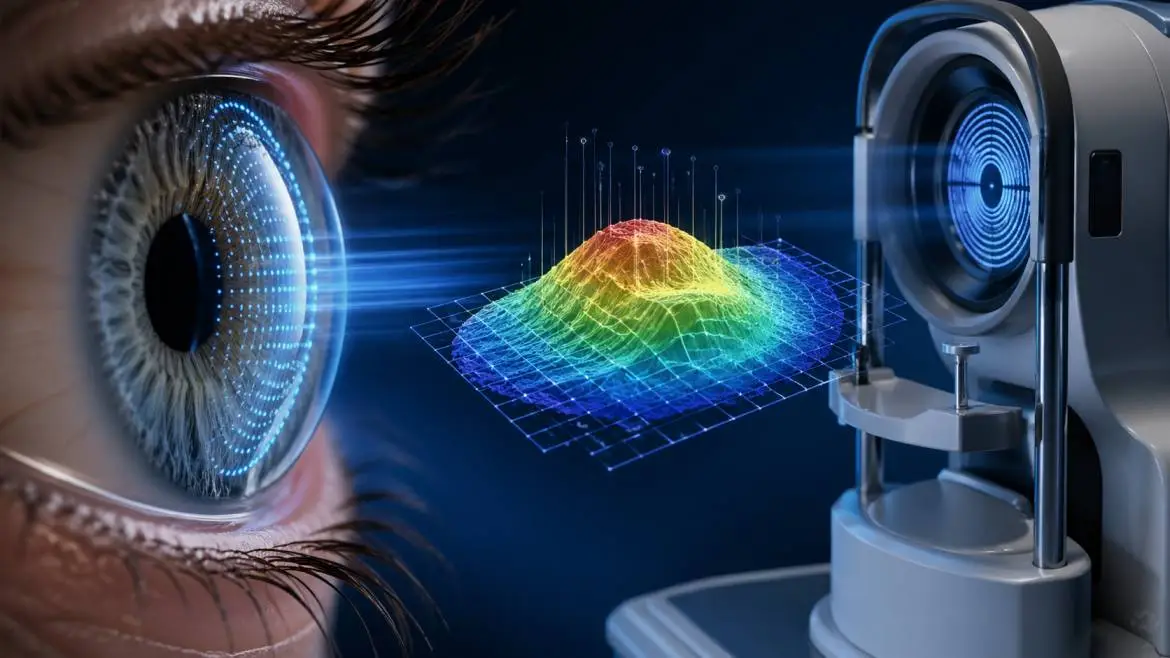
This machine is the heart of the system. It doesn't just take a few measurements; it meticulously maps 22,000 unique elevation points across your entire cornea.
This creates an incredibly detailed 3D topographical map, much like a surveyor's map of a mountain range. It identifies every single peak (steeper areas) and valley (flatter areas) that contribute to your poor vision.
Personalised Ablation: Smoothing the Landscape
This detailed map is then uploaded to the Wavelight EX500 Excimer Laser.
The system's sophisticated software then calculates a unique laser ablation pattern. It doesn't just aim to correct your myopia or astigmatism power; it aims to make your cornea optically perfect.
The laser treatment does two things simultaneously:
1.It corrects your spectacle power (sphere and cylinder).
2.It applies micro-ablations to smooth out the surface irregularities identified by the Topolyzer.
Imagine a carpenter sanding a rough piece of wood.
They don't just flatten it; they smooth out every single splinter and bump. That is what Wavelight Plus does for your cornea, but with sub-micron precision.
By creating a smoother, more uniform optical surface, light can pass through cleanly and focus on a single point on the retina.
The result is a dramatic reduction in glare, ghosting, and other aberrations, leading to what many patients describe as "high-definition" vision.
Why Do Other Treatments Fall Short for Irregular Astigmatism?
Understanding why Wavelight Plus excels requires a look at why other technologies are limited in this specific context.
|
Treatment |
How It Works |
Limitation for Irregular Astigmatism |
|
Eyeglasses |
Bends light based on a simple sphere and cylinder prescription. |
Cannot address the multiple, asymmetric surface irregularities. It's a one-size-fits-all solution for a custom problem. |
|
Standard LASIK/PRK |
Reshapes the cornea based on the spectacle prescription, assuming a regular corneal shape. |
Can induce new higher-order aberrations because it imposes a "normal" shape onto an irregular surface, sometimes worsening night vision issues. |
|
Wavefront-Optimised LASIK |
A step up from standard LASIK, it aims to maintain the cornea's natural aspheric shape to minimise spherical aberration. |
It is optimised but not guided. It doesn't have the topographic data to actively correct pre-existing irregularities. |
|
SMILE Pro |
A lenticule is extracted from within the cornea to correct the prescription. |
An excellent procedure for many, but it is not topography-guided. It cannot correct for the surface imperfections that define irregular astigmatism. |
|
Rigid Gas Permeable (RGP) Lenses |
A hard contact lens that vaults over the irregular cornea, creating a new, smooth refracting surface with the tear film. |
While optically effective, RGPs can be very uncomfortable, difficult to fit, and impractical for many lifestyles. |
As you can see, Wavelight Plus (Contoura Vision) is the only laser procedure that directly measures and treats the topographical source of the problem.
RGP lenses are the only non-surgical alternative that can manage it, but they come with significant comfort and convenience trade-offs.
Am I a Suitable Candidate for Wavelight plus LASIK Treatment?
At my clinic, Envision LASIK Centre in Hyderabad, the evaluation for a patient with suspected irregular astigmatism is one of the most thorough assessments we perform.
Not everyone is a candidate, and safety is our primary concern.
Here is a checklist of what I look for:
1.Stable Vision: Your prescription must be stable for at least one year.
2.Sufficient Corneal Thickness: Since the procedure involves removing tissue, your cornea must be thick enough to allow for a safe treatment while leaving a robust residual stromal bed. A minimum of 300 microns must be left untouched post-surgery.
3.Absence of Keratoconus: This is the most critical checkpoint. Keratoconus is a progressive disease where the cornea thins and bulges into a cone shape, causing irregular astigmatism.
Performing laser surgery on an active keratoconic eye can be catastrophic. We use advanced tomography (like Pentacam) to analyse the front and back surfaces of the cornea and its biomechanical strength to rule this out definitively.
4.Realistic Expectations: The goal of Wavelight Plus is to normalise the cornea and improve the quality of vision. While many patients achieve 6/6 (20/20) vision or better, the primary aim is to reduce the debilitating aberrations and provide functional, high-quality vision that is superior to what your glasses could provide.
5.Good Ocular Health: Your eyes must be free from other conditions like severe dry eye, glaucoma, or cataracts that could interfere with the procedure or healing.
What Happens During the Wavelight Plus Procedure?
The patient experience for a Contoura Vision procedure is very similar to Femto-LASIK, with the key difference being the extensive pre-operative planning.
- Step 1: The Mapping. Days or even weeks before the surgery, we take multiple scans with the Topolyzer VARIO to ensure we have a repeatable, accurate map of your cornea. This is the blueprint for your treatment.
- Step 2: Flap Creation. On the day of the surgery, we use a femtosecond laser to create a precise, thin flap on the cornea. This takes about 20-30 seconds and is painless.
- Step 3: The Wavelight Ablation. I then lift the flap, exposing the underlying corneal stroma. You will be asked to look at a green fixation light. The Wavelight EX500 laser, guided by your unique topographical map, then reshapes the cornea. The laser itself is active for just a few seconds, and its advanced eye-tracker follows every microscopic eye movement to ensure perfect centration.
- Step 4: Repositioning. The flap is then gently laid back into place, where it self-adheres.
The entire process for both eyes is typically completed in under 15 minutes.
The visual recovery is rapid, with most patients noticing a significant improvement within hours and achieving excellent vision by the next day.
Clinical Insights from My Practice in Hyderabad
The true power of this technology is best seen through real patient stories.
Case Study 1: The Graphic Designer with Ghosting
A 32-year-old graphic designer visited my clinic, Envision LASIK Centre, in a state of professional crisis.
His work required him to see crisp lines and perfect colours, but his vision was plagued by ghosting and halos, especially on his high-resolution monitor.
His glasses corrected his power to 6/6, but his visual quality was poor. His corneal topography showed significant superior steepening—a classic sign of irregular astigmatism.
Standard LASIK would have been a disaster. We performed Contoura Vision.
A month later, he reported that not only was the ghosting gone, but he was seeing colours more vividly than ever before. He had achieved 6/5 vision.
We didn't just correct his sight; we saved his career.
Case Study 2: The Post-Injury Corneal Scar
I treated a 28-year-old who had suffered a minor corneal injury years ago that left a faint, superficial scar.
This scar had induced a significant amount of irregular astigmatism.
He was told by other centres that he was not a candidate for laser surgery. However, his corneal thickness was good, and the scar was not deep.
The Wavelight Plus system allowed me to design a treatment that selectively flattened the area around the scar while correcting his underlying prescription.
The result was a dramatic improvement in his uncorrected vision and a significant reduction in the starbursts he experienced at night.
This is a perfect example of the therapeutic potential of topography-guided ablation.
Your Path to a Smoother, Clearer Vision
Irregular astigmatism is more than just a refractive error; it's a structural problem that compromises your quality of life.
For years, patients had to choose between the poor quality of glasses or the discomfort of RGP lenses.
The Wavelight Plus system, powering Contoura Vision, has completely changed this landscape. It offers a solution that is not just corrective, but restorative.
By treating the unique, individual landscape of your cornea, it provides an opportunity to achieve a level of visual clarity that was once thought impossible for patients with this condition.
If you are in Hyderabad or anywhere in India and have been struggling with poor quality vision despite wearing glasses, or have been told you have irregular astigmatism, do not lose hope.
The solution might be more accessible than you think.
The first step is a comprehensive evaluation to determine if your corneal irregularity can be safely and effectively treated.
I invite you to book a consultation at Envision LASIK Centre.
Let us use our advanced diagnostic suite to create a map of your eyes and have an honest, scientific discussion about whether Wavelight Plus can provide you with the high-definition vision you deserve.
Book Your Specialised Corneal Evaluation at Envision LASIK Centre Today!
How Wavelight Plus Uses 22,000 Elevation Points to Map Your Cornea?
Discover how Wavelight Plus maps 22,000 corneal points to de…
Why Wavelight Plus is Called “Topography-Guided” and Why It Matters for Night Vision?
Wavelight Plus is referred to as “topography-guided” because…

How Artificial Intelligence Helps in Ophthalmic Surgery?
AI in eye surgery boosts precision, safety, and faster recov…