
SMILE Pro Or LASIK: Which Laser Eye Surgery Saves More Corneal Tissue?
The direct answer is that while all refractive surgeries involve some modification of corneal tissue, SMILE Pro is biomechanically superior because it is a “tissue-sparing” procedure.
Medically Reviewed By:
Dr Advaith Sai Alampur
Leading LASIK & Refractive Surgery Expert
Condition:
Myopia
(Near sightedness)
Treatment:

One of the most technically sophisticated questions I receive from patients during consultations at Envision LASIK Centre is about corneal strength.
“Doctor,” they ask, “Will laser surgery weaken my eye?”
Unlike LASIK, which creates a large 20–22 mm circumferential flap, SMILE Pro leaves the anterior cornea almost entirely intact, accessing the inner layers through a tiny 2–4 mm keyhole incision.
By preserving the anterior stromal lamellae—the strongest part of the cornea—SMILE Pro retains significantly more tensile strength and structural integrity than traditional flap-based procedures.
This makes it the gold standard for patients with higher prescriptions or those who lead physically active lives.
The concept of “tissue-sparing” isn’t just about how much tissue is removed; it is about which tissue is preserved. In corneal biomechanics, location matters.
Saving the front of the cornea is far more valuable than saving the back, and this is where SMILE Pro fundamentally changes the game.
In this article
- LASIK reshapes the cornea to correct nearsightedness, farsightedness, and astigmatism.
- The procedure is FDA-approved, safe, and uses modern laser technology for precision.
- Candidates should be over 18, have a stable prescription, and healthy corneas.
- Short-term side effects can include dry eyes, halos, glare, or temporary vision fluctuations.
- Most patients achieve stable, long-term vision improvement and are satisfied with results.
- LASIK doesn’t stop natural age-related changes, so reading glasses may still be needed later.




(Put Real times images and shorts of Dr Avdaith Sai Consulting, Operating on Patients)

Watch Patient Journeys

Visit Our Centre
- The “Vertical” Advantage: The cornea is not equally strong throughout its depth. The front 40% is significantly stronger than the back 60%. SMILE Pro preserves this critical front layer; LASIK cuts through it.
- No Flap, More Strength: By avoiding a large flap cut, SMILE Pro maintains the natural tension of the corneal fibers across the surface, acting like a “cap” that holds the eye together.
- Tissue Removal Efficiency: For the same prescription correction, SMILE removes less tissue volume compared to older excimer laser profiles, making it safer for thinner corneas.
- Nerve Preservation: Because it spares the anterior surface, SMILE Pro severs far fewer corneal nerves than LASIK, leading to better tear film stability and less dry eye.
- Long-Term Stability: The enhanced biomechanical stability reduces the risk of post-operative ectasia (bulging of the cornea) significantly compared to flap-based surgeries.
Are You the Right Candidate for Smile pro?
Fill the form & we will tell you if LASIK is right for you. Its Free!
How does corneal architecture influence the strength and outcomes of SMILE Pro?
The primary difference in biomechanics comes down to one factor: the flap.
⇒LASIK Flap:
A standard LASIK procedure requires the creation of a flap that is typically 100–120 microns thick and extends almost entirely around the corneal circumference.
This incision severs the collagen fibers crucial for maintaining the cornea’s shape, reducing overall strength even after healing.
⇒SMILE Pro “Cap”:
By contrast, SMILE Pro does not require a large flap.
Instead, the procedure creates a lenticule beneath a small, intact “cap” of anterior tissue, accessed through a minimal incision.
Most of the corneal fibers remain undisturbed, so the structural tension across the cornea is preserved.
When discussing the surgical plan with patients—especially those in technical fields—I often draw comparisons to removing support beams in a building:
a LASIK flap is like removing a key support, while SMILE Pro works around these supports, keeping the “load-bearing beams” of the cornea intact.
This analogy resonates with many, and it helps clarify why the eye maintains more natural strength after SMILE Pro.
How does tissue removal differ between SMILE Pro and other procedures?
Both SMILE Pro and traditional laser vision correction work by flattening the cornea, but how the tissue is removed and how much is affected can be quite different.
The amount of tissue removed depends on the degree of vision correction needed. However, SMILE Pro’s technique is more efficient, especially for higher prescriptions.
Excimer lasers used in LASIK often require extra tissue to be removed for blending and transition zones, which can add up.
SMILE Pro, by precisely sculpting a lenticule without these extended transition zones, leaves more of the corneal bed unaltered.
To give real numbers—for patients with prescriptions like -6.00 D, SMILE Pro can achieve the desired correction with less tissue disruption than an equivalent LASIK procedure.
This tissue preservation particularly advantageous for patients who have thinner than average corneas but still wish to be free of glasses, as it helps more patients remain eligible for laser vision correction without compromising safety.
Why does preserving the anterior stroma matter so much?
The biomechanics of the cornea rely heavily on the superficial layers.
If surgery spares these, the risk of complications like corneal bulging (ectasia) is dramatically lowered.
Patient with more anterior stromal preservation enjoy stronger corneas, less postoperative distortion, and a smoother recovery.
The denser nerve network in the anterior stroma also means that procedures like SMILE Pro, which avoid cutting across these nerves, result in faster and more comfortable recoveries, with fewer reports of dry eye symptoms compared to traditional techniques.
How does SMILE Pro compare to PRK and LASIK in preserving corneal strength?
|
Feature |
LASIK |
PRK / Surface Ablation |
SMILE Pro |
|
Method |
Flap + Laser Ablation |
Epithelium Removal + Laser Ablation |
Lenticule Extraction |
|
Anterior Stroma |
Severed |
Partially Removed |
Preserved |
|
Biomechanical Impact |
Higher reduction in strength |
Moderate reduction |
Lowest reduction |
|
Tissue Removed |
High (due to transition zones) |
Moderate |
Low (efficient geometry) |
|
Tensile Strength Remaining |
About 55–65% |
About 70–75% |
About 75–85% |
|
Best For |
Moderate prescriptions |
Thinner corneas/slow recovery |
Higher prescriptions, active lifestyles |
Patients with physically demanding professions or active lifestyles often benefit most from SMILE Pro’s biomechanical advantage.
In my experience, these patients are far less likely to face restrictions after surgery, and the risk of post-procedure complications is significantly reduced.
Who specifically benefits from SMILE Pro’s biomechanical advantages?
Through daily clinical practice, certain groups of patients clearly stand out as ideal candidates for SMILE Pro:
High myopia: When a large degree of correction is needed, SMILE preserves more strength in the cornea, making the procedure safer in the long run.
Thin corneas: Those who may not qualify for LASIK due to minimal residual corneal thickness often become eligible for SMILE Pro after careful assessment.
Active lifestyles and specific jobs: Over the years, patients involved in sports, military, law enforcement, or environments with a higher risk of eye injury have preferred SMILE Pro for the added safety—there is simply no flap that can potentially shift after trauma.
Patients prone to dry eyes: In follow-ups, those reporting screen-related or environmental dryness before surgery noticed far milder symptoms after SMILE Pro compared to traditional flap-based surgeries.
These observations support research findings and help guide safe decision-making for each patient profile.
How do you determine surgical safety and eligibility at Envision LASIK Centre?
Safety starts with individualized assessment. We rely on well-established indicators such as Percent Tissue Altered (PTA) to guide our decisions:
- PTA is calculated by adding the flap or cap thickness to the ablation (or lenticule) depth, then dividing by the central corneal thickness. The goal is always to keep PTA below 40% to reduce risks.
- With SMILE Pro, since the cap is not structurally removed like a flap, the “real-world” PTA is more favorable. That often means more patients qualify for treatment without compromising biomechanical safety.
Additionally, modern diagnostics—such as the Corvis ST—let us analyze corneal stiffness and elasticity in detail.
If a patient’s evaluation shows a particularly soft or highly elastic cornea, we can steer them toward SMILE or suggest collagen cross-linking for added protection before moving ahead.
By integrating these data-driven approaches, we ensure that each recommendation is not only based on global standards but also personalized to the biomechanical realities of each eye.
Is SMILE Pro the right choice for you?
Consider the following criteria to see if SMILE Pro’s “tissue-sparing” advantage aligns with your needs:
- Is your power between -3.00 and -10.00 diopters?
- Do you participate in contact sports or high-intensity activities?
- Are you concerned about dry eyes or spend long hours on screens?
- Is safeguarding the long-term health of your eyes a top priority?
If you relate to several of these points, SMILE Pro may offer clear benefits for your vision and lifestyle. Ultimately, however, the final decision is personalized, based on a thorough assessment of your eyes and your unique goals.
⇒Related Read: Cost of SMILE Pro Eye Surgery in India
Is tissue preservation the future of vision correction?
Respecting the corneal architecture means safer outcomes and better visual quality.
As technology evolves, the focus is increasingly on leaving the natural support structures of the eye as undisturbed as possible.
Having seen these results first-hand at Envision LASIK Centre in Hyderabad, I’m committed to surgical approaches that maximize both visual sharpness and long-term strength.
The tissue-sparing nature of SMILE Pro represents a major step forward in this mission.
If you’re curious about your own corneal biomechanics or want to explore the safest options, I invite you to consult with us.
Together, we can map your unique situation and plan a procedure that prioritizes both vision and safety.
Why is Wavelight Plus the Best Treatment for Patients with Irregular Astigmatism?
Discover why Wavelight Plus is ideal for irregular astigmati…
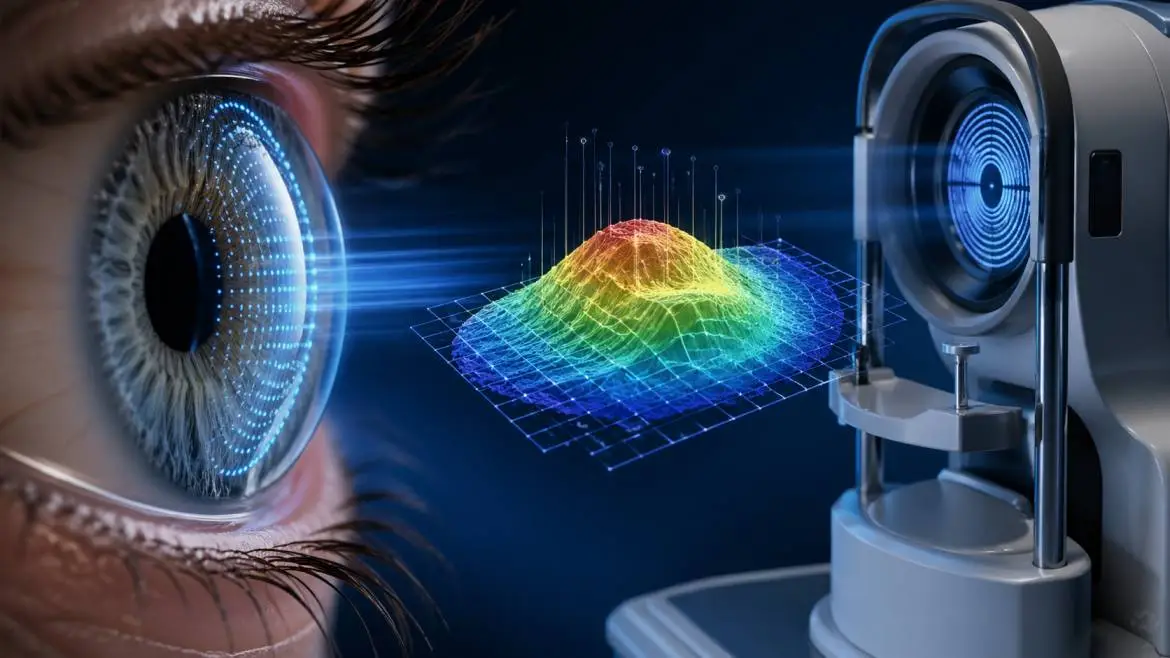
How Wavelight Plus Uses 22,000 Elevation Points to Map Your Cornea?
Discover how Wavelight Plus maps 22,000 corneal points to de…
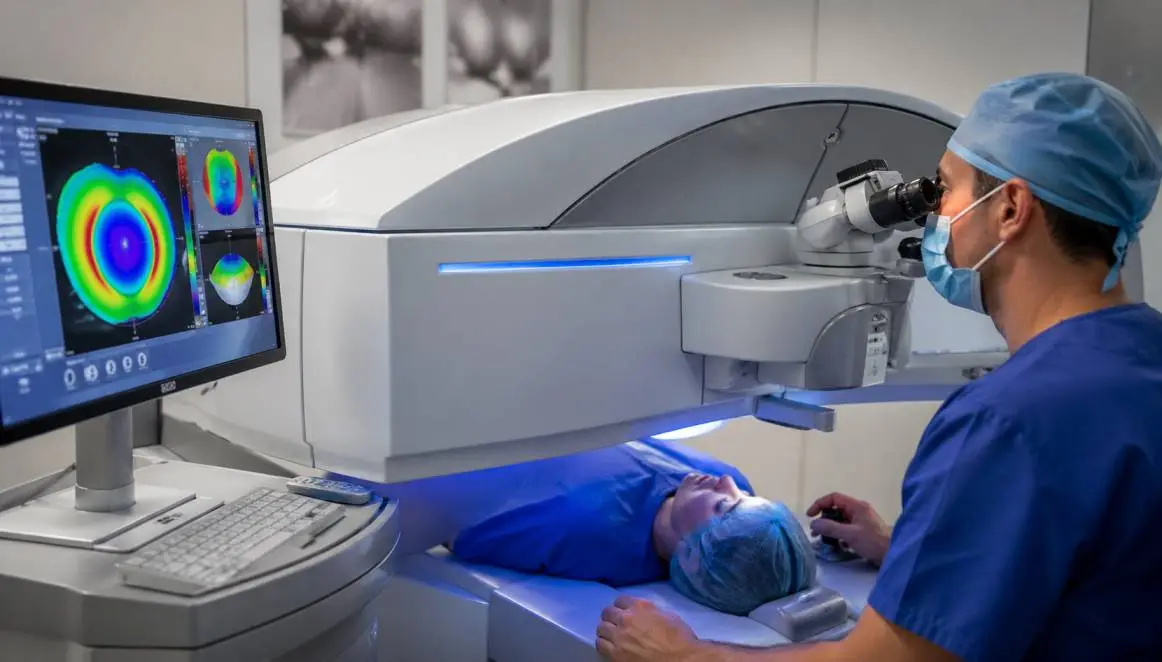
Why Wavelight Plus is Called “Topography-Guided” and Why It Matters for Night Vision?
Wavelight Plus is referred to as “topography-guided” because…