
Is SMILE Safer Than LASIK?
Deciding whether to undergo laser eye surgery is a big step—one that can dramatically improve your quality of life. Two leading procedures dominate the vision correction field: LASIK and SMILE.

Medically Reviewed By:
Dr Advaith Sai Alampur
Leading LASIK & Refractive Surgery Expert
Condition:
Myopia
(Near sightedness)
Treatment:

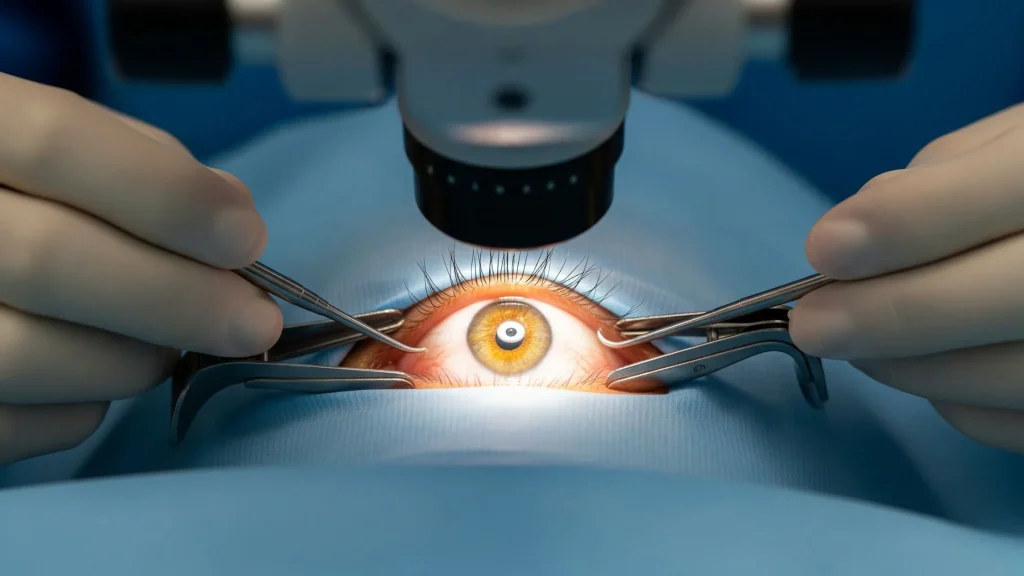
If you’re comparing your options, you may be wondering, “Is SMILE safer than LASIK?” This is one of the most frequently asked questions by patients seeking clear, trustworthy answers before choosing a procedure.
In this guide, you’ll find a comprehensive, expert review of the safety profiles, risks, benefits, and candidate suitability for both SMILE and LASIK. We’ll use clear language, address common questions ,whether you’re a patient, medical professional.
In this article
- LASIK reshapes the cornea to correct nearsightedness, farsightedness, and astigmatism.
- The procedure is FDA-approved, safe, and uses modern laser technology for precision.
- Candidates should be over 18, have a stable prescription, and healthy corneas.
- Short-term side effects can include dry eyes, halos, glare, or temporary vision fluctuations.
- Most patients achieve stable, long-term vision improvement and are satisfied with results.
- LASIK doesn’t stop natural age-related changes, so reading glasses may still be needed later.
⇒What is LASIK eye surgery and how does it work?
LASIK (Laser-Assisted In Situ Keratomileusis) is a popular vision correction surgery. The procedure involves three key steps:
Flap Creation: A femtosecond laser or microkeratome creates a thin, hinged corneal flap.
Corneal Reshaping: The surgeon lifts the flap, then uses an excimer laser to reshape the inner corneal tissue, correcting vision issues like nearsightedness, farsightedness, and astigmatism.
Flap Replacement: The flap is placed back in its original position to heal naturally.
⇒What is SMILE eye surgery and how is it different from LASIK?
SMILE (Small Incision Lenticule Extraction) is a newer, minimally invasive laser procedure with two main steps:
Lenticule Creation: A femtosecond laser creates a small, lens-shaped disc (lenticule) inside the cornea, tailored to your prescription.
Lenticule Removal: The surgeon removes the lenticule through a small incision (usually under 4mm), changing the cornea’s shape and correcting vision—without creating a flap.




(Put Real times images and shorts of Dr Avdaith Sai Consulting, Operating on Patients)

Watch Patient Journeys

Visit Our Centre
1. Are There Flap-Related Risks With LASIK and SMILE?
LASIK: Yes, there is a small but real risk of flap complications in LASIK. These may include:
Flap dislocation (from injury or rubbing)
Inflammation under the flap (diffuse lamellar keratitis)
Epithelial cell growth under the flap
Flap-related complications are rare and often treatable, but they represent a unique risk to LASIK only.
SMILE: No, SMILE eliminates all flap-related risks because no flap is created. This makes SMILE preferable for athletes, active individuals, or anyone seeking to avoid this risk.
2. Which Procedure Causes Less Dry Eye?
LASIK: More likely to cause dry eye, especially in the first several months. Flap creation severs more corneal nerves, which impacts natural tear production.
SMILE: Associated with a lower risk and severity of dry eye because fewer nerves are cut. Recovery of corneal sensation is faster after SMILE.
Example from research:
A 2022 review published in the Journal of Cataract & Refractive Surgery found that patients report less dependence on artificial tears and faster resolution of dry eye after SMILE compared to LASIK.
Direct answer:
“SMILE typically results in less dry eye and faster nerve recovery than LASIK.”
3. Is Corneal Strength Better Maintained After SMILE?
LASIK: Flap creation permanently weakens the biomechanical strength of the cornea.
SMILE: The flapless, small-incision method preserves more of the cornea’s natural strength. This can reduce the (already rare) risk of post-surgical corneal ectasia, making SMILE a safer option for patients with thin corneas or high prescriptions.
Direct answer:
“SMILE maintains superior corneal strength compared to LASIK and may reduce the chance of biomechanical complications.”
4. How Do Visual Results and Recovery Compare?
| Feature | SMILE | LASIK |
| Visual Recovery | Good, but often takes several days to peak | Very rapid—often 24 hours or less |
| Initial Discomfort | Slight discomfort, less inflammation | Mild discomfort, more inflammation risk |
| Long-term Results | Stable, high patient satisfaction | Stable, high patient satisfaction |
- LASIK: Often offers the fastest “wow” results—many people see sharply within a day.
- SMILE: May take 3–7 days to reach peak clarity, but discomfort is typically lower.
5. What Vision Problems Can Each Treat?
LASIK: FDA-approved for nearsightedness, farsightedness, and astigmatism. More versatile for a wider range of prescriptions.
SMILE: Approved for nearsightedness (myopia) and astigmatism. Not yet widely available for farsightedness (hyperopia), though clinical trials and updates are ongoing.
Are You the Right Candidate for Smile pro?
Fill the form & we will tell you if LASIK is right for you. Its Free!
SMILE vs. LASIK Safety and Feature Comparison
|
Aspect |
SMILE |
LASIK |
Safety/Feature Summary |
|
Flap Complications |
None (flapless technique) |
Small risk: dislocation, ingrowth, trauma |
SMILE is safer for avoiding flap risks |
|
Dry Eye |
Less common/severe; nerves heal faster |
More common/severe initially |
SMILE safer for dry eye-prone individuals |
|
Corneal Strength |
More preserved; lower ectasia risk |
Some weakening of cornea structure |
SMILE better for thin/weak corneas |
|
Visual Recovery Time |
3–7 days to sharpest vision |
Within 24 hours for most |
LASIK faster recovery, but not a safety advantage |
|
Treatment Range |
Nearsightedness, astigmatism |
Nearsightedness, farsightedness, astigmatism |
LASIK more versatile for hyperopia |
|
Contact Sports Suitability |
Yes, preferred by many athletes |
Flap risk with trauma or impact |
SMILE safer for impact-risk lifestyles |
|
Age/Prescription Range |
Ages 22–40 (varies); not for all prescriptions |
Ages 18+; broader range |
Consult with a refractive specialist for eligibility |
⇒Best Candidate for SMILE:
You are active in sports, military, or physical professions
You have moderate-to-high nearsightedness
Your top concern is avoiding flap risks and minimizing dry eye
You have thinner or biomechanically weaker corneas
You want a minimally invasive option
⇒Best Candidate for LASIK:
You want the fastest possible visual clarity
You need correction for farsightedness (hyperopia)
You are comfortable with the very low risk of flap issues
You meet all criteria for safe flap creation and have a suitable corneal thickness
You prefer a surgery with a long-term track record and maximum availability
Choose clarity with Envision Lasik Centre – Hyderabad’s #1 LASIK & SMILE surgery expert.
Frequently Asked Questions
Q1: Is SMILE truly safer than LASIK overall?
A1: SMILE is considered safer in areas specific to flap-related risks and dry eye development, but both procedures are safe with proper screening. Your best option depends on your personal eye health, prescription, and lifestyle.
Q2: Can SMILE treat all the same eye prescriptions as LASIK?
A2: Not yet. SMILE is primarily FDA approved for nearsightedness and astigmatism. LASIK can also treat farsightedness, making it more versatile for some patients.
Q3: Are the long-term outcomes (vision clarity/safety) different between SMILE and LASIK?
A3: No. Both SMILE and LASIK offer excellent, stable long-term vision correction for most eligible patients. The main difference is the type of side effects or rare complications.
Q4: Which procedure has a better safety track record in the real world?
A4: Both SMILE and LASIK have millions of procedures performed worldwide and both enjoy high satisfaction and safety rates above 95%. SMILE’s advantage is elimination of flap-related complications.
Q5: Can I play sports or swim after SMILE or LASIK?
A5: SMILE is often recommended for athletes and those in contact sports due to the lack of a corneal flap, minimizing risks if the eye is bumped. For LASIK, extra caution is advised during recovery to avoid flap dislocation.
Q6: Will insurance cover SMILE or LASIK?
A6: Most insurance plans consider SMILE and LASIK elective procedures and do not cover them. Flexible spending accounts and payment plans may be available.
Q7: What are the rare risks or drawbacks unique to SMILE?
A7: SMILE can cause visual side effects like glare or halos, and visual recovery may be slower compared to LASIK. Not all surgeons or clinics offer SMILE due to equipment or experience requirements.
Q8: Is the cost of SMILE higher than LASIK?
A8: SMILE is generally a newer technology and may be priced slightly higher, but this depends on clinic, location, and surgeon.
Q9: How do I know which surgery is right for me?
A9: Schedule a comprehensive eye exam with an experienced refractive surgeon. They’ll use detailed scans and measurements to recommend the safest, most effective option for your eyes and goals.

Flap Dislocation: Real-World Risks for Athletes and Contact Sports Players
Concerned about LASIK flap dislocation during sports? Learn …
What Happens If I Blink During the SMILE Pro 10-Second Laser?
Dr. Advaith Alampur explains why you can’t blink during the …
LASIK vs. SMILE Surgery
Compare LASIK vs SMILE surgery for vision correction. Learn …