
What Is the Best Treatment for Fuchs Dystrophy?
Have you ever looked in the mirror or at a page of text and noticed a ghostly second image of what you were focusing on? It can be unsettling and bewildering when double vision occurs in just one eye.
Medically Reviewed By:
Dr Advaith Sai Alampur
Leading LASIK & Refractive Surgery Expert
Condition:
Treatment:

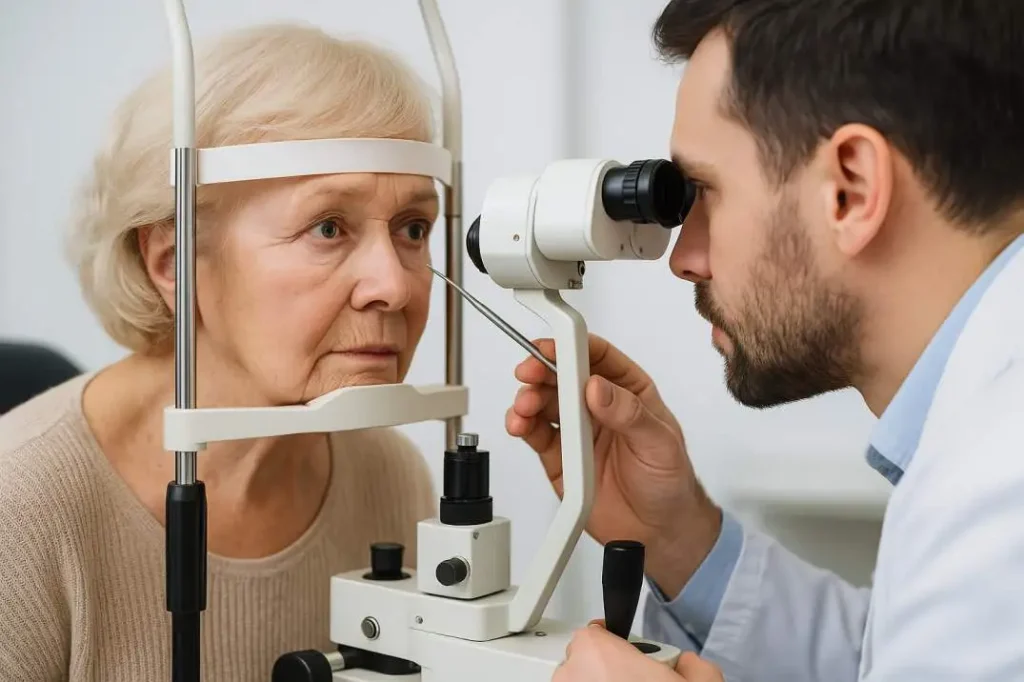
If you or your loved one has been diagnosed with Fuchs dystrophy, the best treatment depends on how advanced the condition is — but in most cases, modern corneal transplantation procedures like DSAEK (Descemet’s Stripping Automated Endothelial Keratoplasty) or DMEK (Descemet’s Membrane Endothelial Keratoplasty) provide excellent results, restoring clear vision with faster recovery times.
Let’s break this down fully so you leave with no doubt about what Fuchs dystrophy is, what causes it, how it progresses, and — most importantly — how it can be treated effectively today.
As an eye doctor who has seen and treated many patients with Fuchs over the years, I’ll share real insights from the clinic too.
In this article
- LASIK reshapes the cornea to correct nearsightedness, farsightedness, and astigmatism.
- The procedure is FDA-approved, safe, and uses modern laser technology for precision.
- Candidates should be over 18, have a stable prescription, and healthy corneas.
- Short-term side effects can include dry eyes, halos, glare, or temporary vision fluctuations.
- Most patients achieve stable, long-term vision improvement and are satisfied with results.
- LASIK doesn’t stop natural age-related changes, so reading glasses may still be needed later.
What is Fuchs Dystrophy?
Fuchs dystrophy is an eye disease that affects the inner layer of your cornea — called the endothelium.
This layer is responsible for keeping your cornea clear by pumping out excess fluid. In Fuchs dystrophy, these cells slowly die off.
As fewer cells remain, fluid builds up, and your cornea swells. This makes vision blurry, especially in the morning.
Main symptoms people notice:
✅Blurred vision, especially after waking up
✅Glare and halos around lights
✅Eye discomfort
✅Difficulty seeing clearly in low light



(Put Real times images and shorts of Dr Avdaith Sai Consulting, Operating on Patients)

Watch Patient Journeys

Visit Our Centre
In most cases, Fuchs dystrophy is inherited. That means it can run in families. If one of your parents had Fuchs, there’s a chance you might develop it too. It usually starts showing symptoms in your 50s or 60s, although the early changes may be present much earlier.
👉Other risk factors:
1.Being female (women are slightly more likely to develop it)
2.Smoking
3.Having diabetes may make it progress faster
Are You the Right Candidate for Eye care ?
Fill the form & we will tell you if Eye care is right for you. Its Free!
When I see patients with Fuchs dystrophy, I usually explain the stages like this:
1️⃣Early stage – You might not even notice anything wrong. The eye doctor may see tiny bumps called guttae on the cornea during an eye exam.
2️⃣Middle stage – You may wake up with blurry vision that improves as the day goes on.
3️⃣Advanced stage – The swelling stays all day. Blurred vision, discomfort, and sensitivity to light become persistent. Eventually, scarring can happen, which further reduces vision.
Let’s get to the heart of your question: What is the best treatment?
The answer depends on how far the disease has progressed.
Mild or Early Fuchs Dystrophy Treatment
In the early stages, we usually don’t need surgery.
✅Hypertonic saline eye drops or ointments (like 5% sodium chloride) — These help draw fluid out of the cornea.
✅Hair dryer technique — Some patients gently use a hair dryer (on low heat and from a safe distance) to help dry the cornea in the morning.
💡Doctor’s note: “Many of my early-stage Fuchs patients do well for years with just these conservative measures. I always reassure them that we’ll monitor things closely and only consider surgery when truly needed.”
Moderate to Severe Fuchs Dystrophy Treatment
When vision gets blurry throughout the day or when you start noticing significant glare and discomfort, medical drops won’t be enough.
✅The gold standard treatment is corneal transplant surgery — but not the full cornea transplant you might be imagining! We now use advanced techniques:
DSAEK (Descemet’s Stripping Automated Endothelial Keratoplasty)
1.What it is: The surgeon removes the damaged endothelial layer and replaces it with a thin donor tissue containing healthy cells.
2.Advantages:
1.Smaller incision
2.Faster recovery than traditional transplant
3.High success rate
DMEK (Descemet’s Membrane Endothelial Keratoplasty)
1.What it is: This is an even thinner transplant — only the Descemet’s membrane and endothelium are replaced.
2.Advantages:
1.Sharpest vision outcomes
2.Minimal risk of rejection
3.Faster visual recovery
💡Doctor’s insight: “I personally prefer DMEK whenever possible. My patients often tell me how amazed they are at how quickly their vision clears — sometimes within days! However, DMEK surgery is a bit more technically demanding for the surgeon, so it’s important to choose a specialist experienced in this procedure.”
Full-thickness corneal transplant (PK / penetrating keratoplasty)
We rarely need this today for Fuchs dystrophy unless there is severe corneal scarring.
It’s natural to feel nervous about eye surgery. I always tell my patients:
1.These surgeries (DSAEK/DMEK) have very high success rates — around 95% or more.
2.The risk of rejection is low, especially with DMEK.
3.Most people experience a big improvement in vision and quality of life.
What to expect after endothelial keratoplasty (DSAEK/DMEK):
1.Vision may be blurry at first, then steadily improve over days to weeks.
2.You’ll use eye drops to prevent rejection.
3.You’ll need regular follow-ups to ensure everything is healing well.
4.Most people return to daily activities within 2-4 weeks.
The new endothelial cells are from a healthy donor, so Fuchs dystrophy doesn’t “come back” in the transplanted tissue.
However, long-term care and check-ups are essential because other eye conditions (like glaucoma or cataract) may need attention over time.
This is an exciting time in eye care! Research is ongoing into:
✅Cell therapy — injecting lab-grown endothelial cells into the eye
✅Gene therapy — still in early stages, but promising for future generations
For now, 👉DMEK and DSAEK remain the best proven treatments.
1. Stay on top of regular eye check-ups
2. Wear sunglasses to reduce glare
3. Avoid smoking (it may speed up progression)
4. Keep blood sugar under control if you have diabetes
Q: Can glasses or contact lenses fix vision in Fuchs dystrophy?
A: Not really. The problem lies in corneal clarity, not lens focus.
Q: Can eye drops cure Fuchs dystrophy?
A: No. Drops can help symptoms temporarily but don’t stop or reverse the disease.
Q: How do I know when it’s time for surgery?
A: When vision stays blurry despite drops, affects daily activities, or if your eye doctor sees worsening swelling or scarring.
For ✅early stages, hypertonic saline drops and conservative measures work well.
For ✅moderate to advanced stages, DMEK or DSAEK surgery offers the best outcomes — clear vision, fast recovery, low rejection risk.
👉Doctor’s reassurance: “If you or a loved one is facing Fuchs dystrophy, take heart. Today’s treatments are highly effective. My patients often tell me they wish they’d gone for surgery sooner once they see how much their vision improves.”

How Artificial Intelligence Helps in Ophthalmic Surgery?
AI in eye surgery boosts precision, safety, and faster recov…

Is ICL Surgery Permanent?
ICL surgery is safe, effective, and ideal for high prescript…

What is the Cost of AI Eye Surgery?
AI eye surgery in India costs ₹45,000–₹1,50,000 per ey…