
Are Lazy Eyes Genetic?
Is lazy eye genetic? Learn how amblyopia develops, family risk factors, early signs, and why early treatment is key for better vision.
Medically Reviewed By:
Dr Advaith Sai Alampur
Leading LASIK & Refractive Surgery Expert
Condition:
Myopia
(Near sightedness)
Treatment:
LASIK
(Laser Eye Surgery)

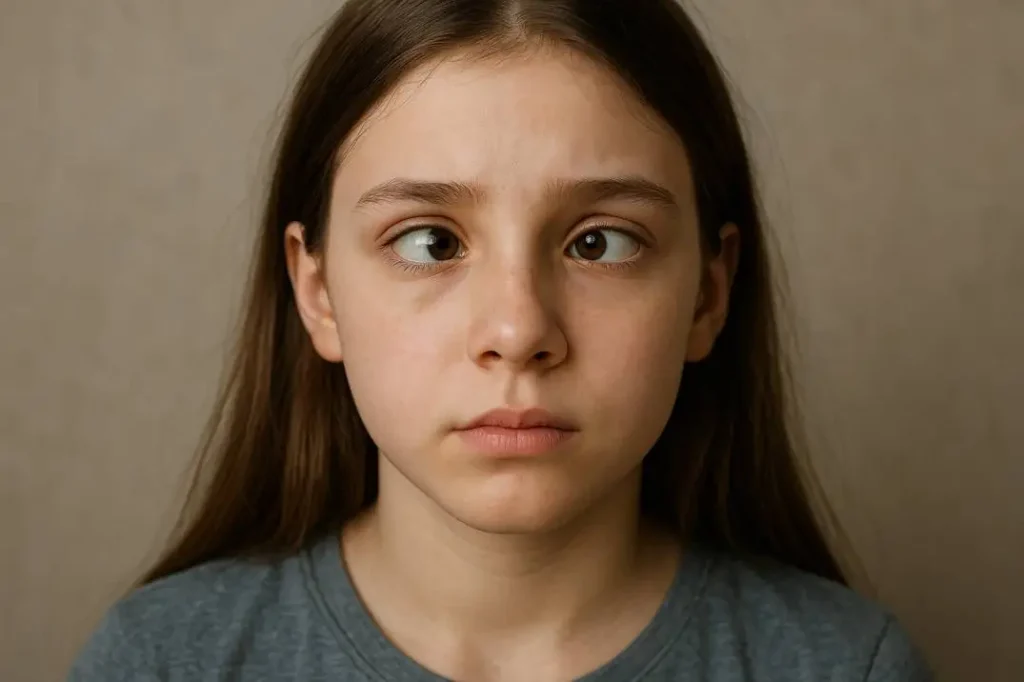
If you’re worried about a “lazy eye” (the medical term is amblyopia) for yourself, your child, or a future baby, you’re not alone. Parents often ask, “Is a lazy eye genetic? Did I pass this on? Could I have prevented it?” Here’s a clear, practical explanation.
Key Takeaways
- Amblyopia is reduced vision in one or both eyes because the brain hasn’t learned to see clearly during early development.
- Genetics can raise the risk, but amblyopia itself is not directly inherited. What tends to run in families are the
- underlying conditions that lead to amblyopia (like strabismus or refractive errors).
- Early detection—ideally before age 7—is critical for successful treatment.
- Treatments work: Glasses, patching, atropine drops, and sometimes surgery can improve vision significantly.
In this article
- LASIK reshapes the cornea to correct nearsightedness, farsightedness, and astigmatism.
- The procedure is FDA-approved, safe, and uses modern laser technology for precision.
- Candidates should be over 18, have a stable prescription, and healthy corneas.
- Short-term side effects can include dry eyes, halos, glare, or temporary vision fluctuations.
- Most patients achieve stable, long-term vision improvement and are satisfied with results.
- LASIK doesn’t stop natural age-related changes, so reading glasses may still be needed later.
What is Amblyopia?
Amblyopia is when one eye (sometimes both) has poorer vision than expected, even with glasses. The problem isn’t with the eye structure, but with how the brain processes input from the eye. If the brain gets unclear or mismatched signals, it suppresses one eye, and over time, that eye doesn’t develop full visual potential.
- It usually develops from birth to age 7–8 (the critical period of visual development).
- It can affect depth perception and fine detail tasks.
- It needs targeted treatment during childhood for best results.




(Put Real times images and shorts of Dr Avdaith Sai Consulting, Operating on Patients)

Watch Patient Journeys

Visit Our Centre
Main Causes of Amblyopia
- Strabismic amblyopia (eye misalignment)
The eyes don’t point in the same direction, so the brain suppresses one eye to avoid double vision. Over time, that eye becomes amblyopic. - Refractive amblyopia (focus differences)
If one eye is much more out of focus than the other (from long-sightedness, short-sightedness, or astigmatism), the brain favours the clearer eye. - Deprivation amblyopia (blocked vision)
Anything blocking vision in early life (like congenital cataract or droopy eyelid) can prevent normal development.
Are You the Right Candidate for LASIK?
Fill the form & we will tell you if LASIK is right for you. Its Free!
Is a Lazy Eye Genetic?
Amblyopia itself isn’t passed down as a single “lazy eye gene.” However, genetics strongly influence the risk factors:
- Strabismus (squint): Often runs in families. If a parent or sibling has it, the risk is higher.
- Refractive errors: Nearsightedness, farsightedness, and astigmatism have hereditary links. If parents have strong prescriptions, children are more likely to need glasses.
- Congenital cataracts or eyelid droop: These can sometimes be genetic, though they’re less common.
Bottom line: Families pass down the conditions that can cause amblyopia, not amblyopia itself. With early detection, most cases can be prevented or corrected.
Who’s at Higher Risk?
1.Children with a family history of strabismus or strong prescriptions.
2.Premature or low birth weight babies.
3.Children with certain developmental or neurological conditions.
Signs to Watch For
- An eye that turns in or out.
- Squinting or covering one eye.
- Sitting very close to screens.
- Poor depth perception (clumsiness, trouble catching a ball).
- Upset when the stronger eye is covered.
Diagnosis
A full eye exam includes:
- Visual acuity testing (each eye separately).
- Prescription check (often with eye drops to relax focusing).
- Eye alignment and movement tests.
- Eye health assessment.
Treatment Options
Glasses – Often the first step, especially for refractive amblyopia. Consistent wear can lead to major improvements.
- Patching – Covering the stronger eye for set hours daily, forcing the brain to use the weaker eye.
- Atropine eye drops – Blurs vision in the stronger eye for near work, encouraging use of the weaker eye.
- Surgery – May be needed for strabismus or cataracts to correct the underlying issue.
- Vision therapy – Structured exercises may help in certain cases, especially residual amblyopia.
Can Adults Improve?
Treatment works best before age 7–8, but some improvement is possible in older children and even adults with targeted therapy.
Prevention and Early Action
- Book routine vision checks—by age 3 if there’s family history, and sooner if you notice signs.
- Encourage outdoor time for healthy visual development.
- Ensure glasses or treatments are followed consistently.
- Attend follow-up appointments to adjust treatment.
Final Word
Lazy eye isn’t directly inherited, but the conditions leading to it often run in families. The good news is that with early detection and treatment, most children make strong visual gains, and many achieve normal or near-normal vision.
👉 If you have a family history of squint or strong prescriptions, plan an early eye check for your child. Early action makes all the difference.

Flap Dislocation: Real-World Risks for Athletes and Contact Sports Players
Concerned about LASIK flap dislocation during sports? Learn …
LASIK for Pilots in India: A Guide to Vision Standards & Safety
LASIK for pilots in India: DGCA rules, Armed Forces standard…
AI in LASIK Surgery: How Artificial Intelligence Is Transforming Vision Correction (2026)
SMILE Pro preserves 80% more corneal nerves than LASIK by us…