
Why Stable Eye Power for 12 Months is Non-Negotiable for SMILE Pro?
SMILE Pro requires 12 months of stable eye power because correcting an actively changing prescription leads to regression, turning a permanent vision solution into a temporary fix.
Medically Reviewed By:
Dr Advaith Sai Alampur
Leading LASIK & Refractive Surgery Expert
Condition:
Myopia
(Near sightedness)
Treatment:

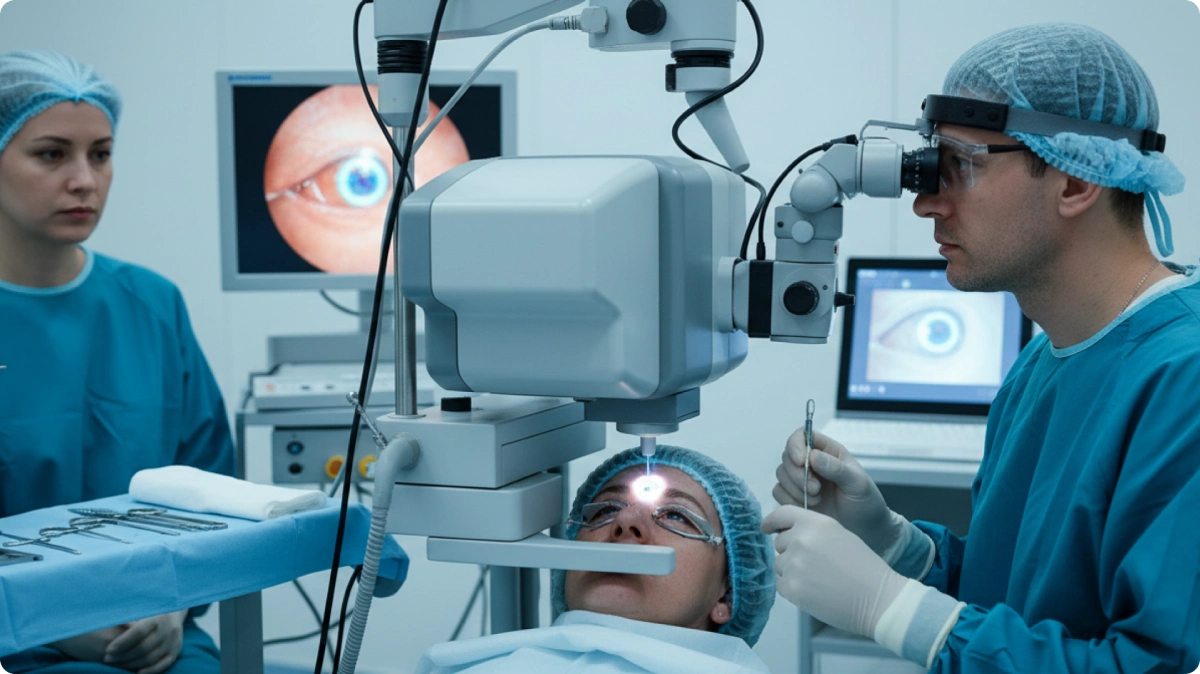
The requirement for stable eye power for at least 12 months before undergoing SMILE Pro is not a bureaucratic hurdle; it is a fundamental biological safeguard designed to prevent regression and ensure lifelong visual clarity.
If we perform refractive surgery on eyes where the myopia (nearsightedness) is still progressing, the surgery essentially hits a moving target.
The laser will correct your vision to perfection on the day of surgery, but as your natural eye growth continues to elongate the eyeball or change the lens shape, your prescription will "drift" back, necessitating glasses again within a year or two.
This 12-month stability window is the only way to confirm that your eye's refractive error has plateaued, allowing us to perform a permanent correction rather than a temporary fix.
In this article
- What Does "Stable Refraction" Actually Mean in Clinical Terms?
- Why Does Eye Power Change? The Science of Axial Length
- Why is Stability More Critical for SMILE Pro than LASIK?
- The Risk of Ignoring the 12-Month Rule: A Scientific Look at Regression
- Adult-Onset Progression: Why Your Power Might Change at Age 30
- How Do We Verify Stability at Envision LASIK Centre?
- Clinical Realities: When Patience Saved a Patient's Vision
- Conclusion: Precision Requires Patience
Quick Summary
- Defining Stability: We look for a prescription change of less than 0.50 Diopters (D) over a continuous 12-month period. Anything more indicates active progression.
- The "Moving Target" Risk: Operating on unstable eyes guarantees regression. The laser corrects the current error, not future changes.
- Age Matters: While progression typically halts by age 21, lifestyle factors (like heavy screen usage) can cause adult-onset progression in patients well into their late 20s.
- SMILE Pro Specifics: Unlike LASIK, which can be easily "touched up" (enhanced), enhancing a SMILE Pro procedure is more complex. Getting it right the first time is paramount.
- The Envision Protocol: At our Hyderabad clinic, we will delay surgery rather than risk an unstable outcome. Patience is the best prescription.




(Put Real times images and shorts of Dr Avdaith Sai Consulting, Operating on Patients)

Watch Patient Journeys

Visit Our Centre
What Does "Stable Refraction" Actually Mean in Clinical Terms?
When patients visit my consultation room at Envision LASIK Centre, they often say, "Doctor, my number hasn't changed much." But "much" is subjective. In refractive surgery, we deal in microns and diopters, where precision is absolute.
The Clinical Definition:
Refractive stability is clinically defined as a change in manifest refraction (your eyeglass prescription) of 0.50 D in both sphere and cylinder components over a period of at least one year. Ideally, we prefer to see zero change, or a fluctuation of no more than 0.25 D.
Why this specific number?
The human eye has a certain amount of variability. If you test your eyes in the morning versus the evening, or if you are tired versus rested, your prescription might fluctuate by 0.25 D. This is noise.
However, a consistent shift of 0.50 D or more in one direction (usually becoming more myopic) is a signal. It indicates structural elongation.
If we correct your vision when your eye is actively changing by 0.75 D per year, simply doing the math tells us that within two years, you will be back to -1.50 D, needing glasses for driving or watching movies.
The surgery would be deemed a failure, not because of the technology, but because of the timing.
Are You the Right Candidate for Smile pro?
Fill the form & we will tell you if Smile pro is right for you. Its Free!
Why Does Eye Power Change? The Science of Axial Length
To understand stability, you must understand what myopia actually is. Nearsightedness is not an illness; it is largely a structural mismatch.
The eye is an optical system. Light enters through the cornea and lens and focuses on the retina.
In a perfect "emmetropic" eye, the focal point lands exactly on the retina. In a myopic eye, the eyeball is too long (axial length is too great), causing light to focus in front of the retina.
The Axial Length Factor:
An average eye is about 23.0 mm to 24.0 mm long.
For every 1 mm increase in axial length, the eye becomes approximately -3.00 D more myopic.
Therefore, an increase in length of just 0.1 mm—the thickness of a sheet of paper—shifts your prescription by roughly -0.30 D.
This elongation is driven by scleral remodeling.
During childhood and adolescence, the body grows, and so does the eye.
By age 18 to 21, this growth typically halts. However, if the sclera (the white outer coat of the eye) continues to stretch, the axial length increases, and your power increases.
Operating on an eye that is still actively elongating is like trying to tailor a suit for a child who is still growing; no matter how perfect the measurements are today, the suit won't fit next year.
Why is Stability More Critical for SMILE Pro than LASIK?
This is a nuance often missed in general discussions. While stability is important for LASIK, PRK, and ICL, it is uniquely critical for SMILE Pro due to the nature of future enhancements.
The Enhancement Dilemma:
Refractive surgery has a very high success rate, but occasionally, a "touch-up" or enhancement surgery is needed if the initial outcome isn't perfect or if regression occurs years later.
1.With LASIK: Enhancing LASIK is relatively straightforward. We lift the original flap (which never fully seals) and apply a small amount of extra laser ablation. It is quick and minimally invasive.
2.With SMILE Pro: SMILE creates a lenticule inside the stroma without a flap. Once the procedure is done, the "cap" heals and fuses. We cannot simply "lift" the cap again.
If a patient regresses after SMILE, we usually have to convert the procedure to a surface ablation (PRK) or perform a specialised "Circle" procedure to turn the SMILE cap into a LASIK flap.
Because enhancing a SMILE eye involves converting it to a different type of surgery (often with a slower recovery like PRK), we want to avoid enhancements at all costs.
We want "one and done." Therefore, the margin for error regarding stability is much tighter. We need to be 100% certain that the target we are hitting today will remain the target for decades.
The Risk of Ignoring the 12-Month Rule: A Scientific Look at Regression
What happens if we ignore the rule? Let's look at the biomechanics.
Imagine a patient, let's call him Ravi. He is 23 years old.
- Year 1 Prescription: -3.00 D
- Year 2 Prescription: -3.75 D
- Year 3 (Current): -4.50 D
Ravi is frustrated with glasses and wants SMILE Pro now. He has progressed -0.75 D every year. If I perform SMILE Pro today to correct the -4.50 D, I will effectively flatten his cornea to compensate for his current axial length.
However, the biological signal causing his eye to elongate hasn't stopped.
- Post-Op Year 1: His eye grows another 0.1 mm. His refraction shifts to -0.30 D. He notices a slight blur.
- Post-Op Year 2: His eye grows another 0.1 mm. His refraction is now -0.60 D. He is squinting to see road signs.
The Result: Ravi feels the surgery "wore off." In reality, the surgery is still there—his cornea is still flattened. But his eye outgrew the correction.
He now faces the difficult choice of wearing glasses again or undergoing a more complex secondary surgery. This is why at Envision LASIK Centre, we consider operating on an unstable eye a violation of medical ethics.
Adult-Onset Progression: Why Your Power Might Change at Age 30
The old textbook rule was "vision stabilizes by 18." In modern practice, especially in a tech-hub like Hyderabad, this rule is obsolete. I frequently see "Adult-Onset Myopia Progression."
The Culprit: Near-Work Induced Transient Myopia (NITM)
Our target audience—males aged 25-45—often works in IT, finance, or engineering. These professions demand intense, prolonged near-work focus (screens, documents).
When you focus up close for hours:
- Ciliary Muscle Spasm: The focusing muscle inside the eye locks into a contracted state (accommodation). This can mimic myopia during an eye test (pseudomyopia).
- Peripheral Hyperopic Defocus: Intense near work changes how light hits the peripheral retina, which signals the sclera to elongate.
Why this matters for your 12-month check:
If a 28-year-old software engineer comes to me, I don't assume he is stable just because he is 28. I look at his history. If he switched to a more demanding job last year and his number jumped by -0.50 D, that is significant.
We need to ensure that this is a permanent structural change and that it has leveled off before we touch the cornea with a laser.
How Do We Verify Stability at Envision LASIK Centre?
We don't just take your word for it. Verification is a multi-step forensic process.
- Historical Data Analysis
We ask patients to bring their old prescriptions or glasses. Comparing the current refraction with a prescription from 12 or 24 months ago gives us hard data. If you don't have the paper, we can measure the power of your old glasses using a lensometer. - Cycloplegic Refraction (The "Dilated" Test)
This is the most critical test. We use strong drops (Cyclopentolate or Tropicamide) to paralyze the ciliary muscle. This relaxes all accommodation (focusing effort).
- Scenario: A patient measures -5.00 D on a normal test ("dry" refraction). After dilation ("wet" refraction), he measures -4.25 D.
- Analysis: This means -0.75 D of his prescription was actually muscle spasm from overworking his eyes. If we operated on the -5.00 D, we would overcorrect him, making him farsighted (hyperopic). We treat the spasm, not the spasm + myopia.
3. Axial Length Monitoring (Biometry)
In borderline cases, we use optical biometry (like the IOLMaster or Lenstar) to measure the axial length of the eye to two decimal places (e.g., 24.35 mm). If a patient returns in 6 months and the length is 24.45 mm, we have objective proof of growth, regardless of what the subjective vision test says.
Clinical Realities: When Patience Saved a Patient's Vision
I want to share a specific case that illustrates why I am so rigid about this rule.
The Case:
Mr. Arjun (name changed), a 24-year-old MBA student, visited my Hyderabad clinic in 2022. He was desperate for SMILE Pro before his campus placements.
- Current Rx: -6.00 D.
- One year prior: -5.25 D.
That represents a -0.75 D jump. He argued that it was "just stress" and begged me to proceed.
The Intervention:
I refused. I explained the "moving target" concept. I prescribed him lifestyle changes (the 20-20-20 rule for screen breaks) and asked him to return in 6 months.
- 6 Months Later: His prescription had moved to -6.50 D.
- 12 Months Later: It stabilized at -6.75 D.
The Outcome:
We performed SMILE Pro once he showed stability at -6.75 D for six months straight.
Had I operated on day one at -6.00 D, he would have been left with -0.75 D of residual myopia within a year—enough to fail the distant vision test for driving. By waiting, we treated the final destination of his myopia.
Today, three years later, he is still 6/6 (20/20). He thanked me not for the surgery, but for the refusal to operate too soon.
Conclusion: Precision Requires Patience
Refractive surgery, particularly an advanced procedure like SMILE Pro, is an investment in your future self. It is YMYL (Your Money, Your Life) in the truest sense.
The requirement for 12 months of stable power is not about making you wait; it is about ensuring that the investment pays off for a lifetime.
In a world of instant gratification, where we want everything delivered in 10 minutes, biological processes demand respect. The cornea and the sclera operate on their own timelines.
If your prescription is changing, it is not a "no." It is a "not yet." It is a sign that your eyes are still evolving.
At Envision LASIK Centre, our reputation is built on long-term results, not just surgical volume. We would rather have you wait another year and achieve perfection than rush you into a procedure that leads to regret.
If you are unsure about your stability, or if you want an honest, scientific assessment of your candidacy for SMILE Pro, bring your old prescriptions and come see us.
We will map your progression, measure your biometrics, and give you a transparent timeline for your journey to spectacle freedom.
Why is Wavelight Plus the Best Treatment for Patients with Irregular Astigmatism?
Discover why Wavelight Plus is ideal for irregular astigmatism—advanced mapping corrects corneal i…
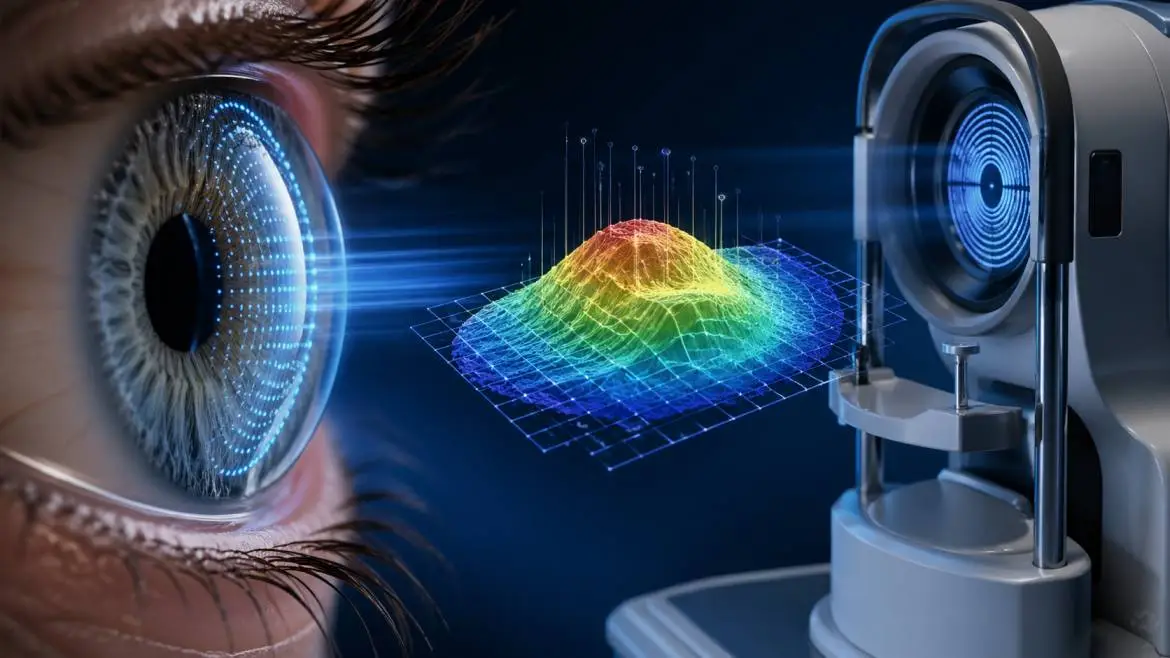
How Wavelight Plus Uses 22,000 Elevation Points to Map Your Cornea?
Discover how Wavelight Plus maps 22,000 corneal points to deliver precise, customised LASIK with cle…
Why Wavelight Plus is Called “Topography-Guided” and Why It Matters for Night Vision?
Wavelight Plus is referred to as “topography-guided” because it uses advanced mapping technology to …