
SMILE Pro Eye Surgery in Hyderabad
Advanced, Minimally Invasive Laser Vision Correction Using ZEISS VISUMAX 800
SMILE Pro is an advanced form of laser vision correction that uses a femtosecond laser to create and remove a small lenticule from within the cornea through a small incision. It is designed to correct suitable refractive errors while avoiding the creation of a conventional LASIK flap.At Envision LASIK Centre, patients considering SMILE Pro begin with a comprehensive refractive eye evaluation to determine whether the procedure is appropriate for their eyes, prescription, corneal measurements, eye health and visual goals.

Why Choose Envision LASIK Centre for SMILE Pro in Hyderabad?
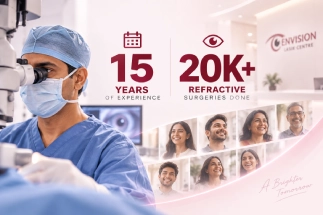
Our Refractive Surgeon Dr. Advaith Sai Alampur is experienced over 15+ years and has performed over 20000+ Refractive Surgeries
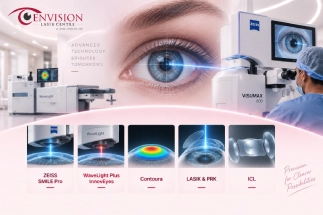
* ZEISS SMILE Pro
* WaveLight Plus InnovEyes
* Contoura
* LASIK & PRK
* ICL
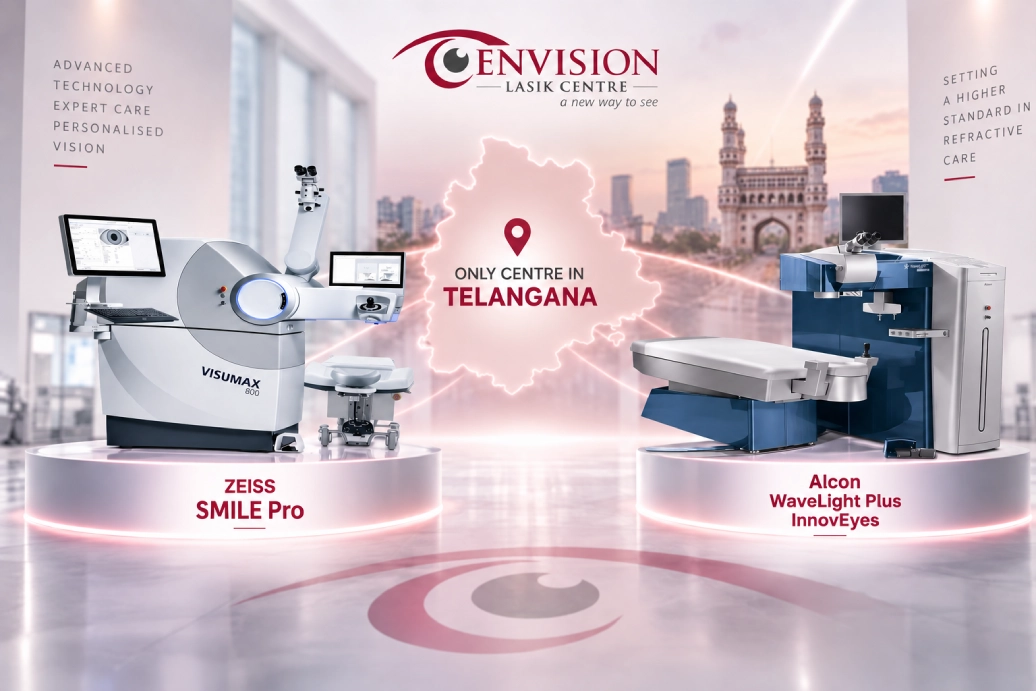
The only centre in Telangana bringing ZEISS SMILE Pro and ZEISS WaveLight Plus InnovEyes together under one roof, enabling personalised treatment across a wide range of refractive needs.
Advanced Technology • Proven Experience • Personalised Vision Care
WHAT IS SMILE PRO?
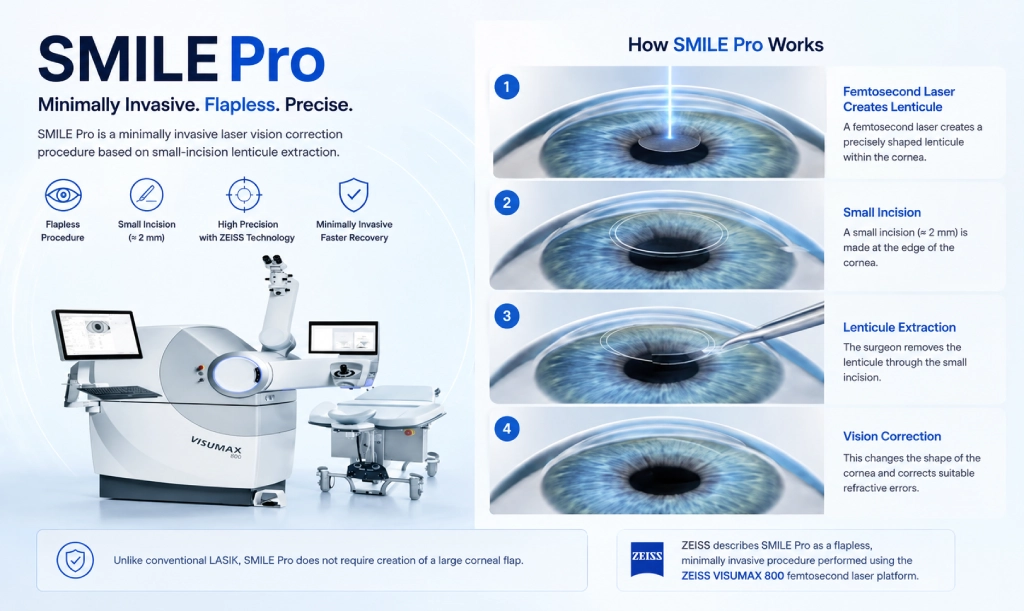
SMILE Pro is a minimally invasive laser vision correction procedure based on small-incision lenticule extraction.During the procedure, a femtosecond laser creates a precisely shaped piece of corneal tissue called a lenticule within the cornea. The surgeon then removes the lenticule through a small incision. This changes the shape of the cornea and can correct suitable refractive errors.Unlike conventional LASIK, SMILE Pro does not require creation of a large corneal flap.ZEISS describes SMILE pro as a flapless, minimally invasive procedure performed using the ZEISS VISUMAX 800 femtosecond laser platform.
What Does SMILE Stand For?
SMILE stands for Small Incision Lenticule Extraction.
SMILE Pro refers to the newer generation of the technology and workflow associated with the ZEISS VISUMAX 800 platform.
What Vision Problems Can SMILE Pro Correct?
Depending on the applicable clinical indication and individual suitability, SMILE Pro may be used for refractive errors including myopia and astigmatism; ZEISS also publishes hyperopic indications for SMILE pro in certain markets. The exact treatment range applicable to a patient should be confirmed by the treating ophthalmologist.
Is SMILE Pro the Same as SMILE?
SMILE Pro is an evolution of the SMILE technology and uses the ZEISS VISUMAX 800 platform with an updated treatment workflow and technology features.The exact capabilities available depend on the laser configuration and applicable regulatory indications.
How Does SMILE Pro Eye Surgery Work?
SMILE Pro uses a femtosecond laser to create a lenticule within the cornea.
Step 1 — Preparing the Eye
Your eye is prepared and numbed using anesthetic eye drops according to the surgeon’s protocol.
Step 2 — Laser Creates the Lenticule
The femtosecond laser creates the precisely planned lenticule within the corneal tissue.
Step 3 — Small Incision
A small incision is created to provide access to the lenticule.
Step 4 — Lenticule Removal
The surgeon removes the lenticule through the small incision.
Step 5 — Vision Correction
Removing the planned lenticule changes the corneal shape to achieve the intended refractive correction.

The procedure is flapless, and the laser component can be very brief. ZEISS currently reports laser exposure of less than 10 seconds for myopic treatments and less than 13 seconds for hyperopic treatments on its published SMILE pro material; actual treatment time depends on the individual procedure and applicable configuration.
Why Consider SMILE Pro for Vision Correction?

For appropriately selected patients, SMILE Pro offers a modern approach to laser vision correction with a small-incision, flapless technique.
Flapless Vision Correction
SMILE Pro does not require creation of the corneal flap used in LASIK.
Minimally Invasive Approach
The lenticule is removed through a small incision rather than through the larger flap-based approach used in LASIK.
Advanced Laser Technology
SMILE Pro is performed using the ZEISS VISUMAX 800 platform, which ZEISS describes as its latest-generation femtosecond laser platform for SMILE pro.
Rapid Laser Treatment
The laser treatment itself is very brief. ZEISS reports less than 10 seconds of laser exposure for myopic treatment and less than 13 seconds for hyperopic treatment in its published materials.
Quick Recovery
ZEISS states that visual recovery can occur as soon as the next day and that patients can generally resume daily activities soon after treatment, depending on their doctor's advice. Individual recovery varies.
Reduce Dependence on Corrective Eyewear
For suitable patients, the goal of refractive surgery is to get rid of spectacles or contact lenses for the treated refractive error.
SMILE Pro Technology: ZEISS VISUMAX 800
SMILE Pro is performed using the ZEISS VISUMAX 800 femtosecond laser platform.The platform is designed for high-speed femtosecond laser procedures and supports SMILE pro lenticule extraction in eligible patients. ZEISS lists technology features including the CentraLign centration aid and OcuLign cyclotorsion adjustment on applicable configurations.
What Is the ZEISS VISUMAX 800?
The VISUMAX 800 is a femtosecond laser platform used for procedures including SMILE pro and, depending on configuration and indication, other corneal procedures.
CentraLign Technology
ZEISS describes CentraLign as a computer-controlled centration aid designed to assist with centration during the docking process.
OcuLign Technology
ZEISS describes OcuLign as a cyclotorsion adjustment system intended to help account for rotational movement of the eye during treatment.
What Does This Mean for the Patient?
The purpose of these technologies is to support the surgeon’s treatment workflow and positioning. Technology is one part of the procedure; appropriate patient selection, diagnostic evaluation and surgical planning remain essential.

Why Consider SMILE Pro for Vision Correction?
Lower Dry-Eye Symptoms Than LASIK
Fewer corneal nerves are disrupted with SMILE technology compared with LASIK, which may lead to significantly lesser postoperative dry-eye symptoms.
Rapid Visual Recovery
Many patients experience significant visual improvement soon after treatment and recover in 24 hours, although the speed and quality of recovery vary between individuals.

Suitable for Active Lifestyles
Because SMILE Pro does not create a conventional LASIK flap, it may be an attractive option for some people with active lifestyles. Suitability should be determined clinically.

Am I Eligible for SMILE Pro?

A comprehensive examination is necessary before confirming if you are suitable for SMILE Pro Vision Correction Procedure.
Age
Am I Eligible for SMILE Pro? Eligibility requirements can vary by market and regulatory indication. ZEISS's general suitability information states that patients should be at least 18 years old, while noting that age requirements can differ by country.
Stable Prescription
A stable refractive prescription is an important part of assessing suitability.
Myopia, Hyperopia and Astigmatism
SMILE pro may be used for specific refractive errors within applicable treatment ranges.Do not assume that your spectacle power alone determines eligibility.
Healthy Corneas
Corneal shape, thickness and structural characteristics need to be evaluated.
Healthy Eyes
The ophthalmologist will evaluate your overall eye health and identify conditions that could affect the safety or outcome of refractive surgery.
Realistic Expectations
A successful refractive procedure should be considered in terms of the patient's individual visual needs and realistic expectations—not a promise of identical results for every patient.
Who May Not Be Suitable for SMILE Pro?
SMILE Pro may not be appropriate for some patients with:
Certain corneal disorders
Unstable refractive error
Significant ocular surface disease
Certain retinal or ocular conditions
Insufficient corneal tissue for the proposed correction
Certain systemic conditions that may affect healing
Other clinical factors identified during evaluation

Pregnancy, breastfeeding and certain medications or medical conditions may also influence the timing or suitability of refractive surgery.
Your ophthalmologist will determine suitability after a comprehensive evaluation.

Your SMILE Pro Eligibility Evaluation

Before recommending surgery, your refractive specialist may perform or review tests such as:
Refraction and Visual Acuity
Determines your current refractive error and visual performance.
Corneal Topography and Tomography
Evaluates the shape and structure of the cornea.
Pachymetry
Measures corneal thickness.
Ocular Surface and Tear Film Assessment
Helps identify dry-eye or ocular-surface problems that may need attention before surgery.
Comprehensive Eye Examination
Checks for other eye conditions that could influence treatment suitability.
Realistic Expectations
A successful refractive procedure should be considered in terms of the patient's individual visual needs and realistic expectations—not a promise of identical results for every patient.
The exact tests required will be determined by your clinical team at the hospital
SMILE Pro Recovery: What to Expect
SMILE Pro is designed to provide rapid visual recovery through a small-incision, flapless approach. However, every eye heals differently, and your recovery timeline will depend on your individual eye health, treatment parameters and postoperative healing.

98%of eyes achieved 20/20 vision or better without glasses
99%of eyes were within ±0.50 D of the intended correction
100%of eyes were within ±1.00 D of the intended correction
The study also reported good refractive stability, with no eyes losing two or more lines of corrected distance visual acuity.
Your SMILE Pro Recovery Timeline
Immediately After Treatment:
Your vision may initially be blurred or fluctuate as your eyes begin to recover. Mild watering, light sensitivity, irritation or temporary visual fluctuations can occur.
The First Day:
Many patients experience significant visual improvement very quickly after SMILE Pro.
The First Few Days:
Vision generally continues to improve and stabilize.
Temporary symptoms such as dryness, glare or visual fluctuations may occur during the early healing period. Your surgeon will advise you about screen use, driving, exercise, swimming and other activities.
The Following Weeks:
Your vision continues to stabilize as the cornea heals.
Scheduled follow-up examinations allow your ophthalmologist to monitor your visual recovery and eye health.
Around 3 Months:
•98% of eyes achieved 20/20 or better uncorrected distance vision
•99% were within ±0.50 D of the intended correction
•100% were within ±1.00 D
•98.4% were within ±0.50 D of target astigmatism
•No eyes lost two or more lines of corrected distance visual acuity
What This Means for You:
Why Can SMILE Pro Offer Rapid Recovery?
Your Recovery Is Individual
SMILE Pro vs LASIK vs Femto LASIK
SMILE Pro, being a Flapless procedure, has the unique advantage over Femto LASIK and conventional LASIK where both these procedures create a corneal flap followed by excimer laser ablation.
The important point is that there is no single refractive procedure that is best for every eye.

SMILE Pro vs LASIK
SMILE Pro vs Femto LASIK
SMILE Pro vs Earlier SMILE Technology
Which Procedure Is Right for Me?

Founder & Managing Director
Dr. Advaith Sai Alampur
MBBS, MS (Oph), FMRF,
Cornea, Cataract & Refractive Surgeon

Fellowship in Cornea & refractive surgeries at Sankara Nethralaya, Chennai

Over 28,000+ Successful LASIK, 2000+ ICL Surgeries & 30,000+ Cataract Surgeries Performed
Meet Our Expert Refractive Surgeon
I always dreamed of creating a place where people could walk in with glasses... and walk out with freedom.
That dream became Envision LASIK Centre — Telangana’s largest exclusive LASIK and ICL suite — born from my belief that when technology is guided by purpose, it has the power to transform lives.
Over the past six years, we’ve had the privilege of helping more than 15,000 people from around the world rediscover the joy of clear vision.
I’ve seen tears of joy fall from eyes seeing clearly for the first time in years. I’ve seen confidence, independence, and happiness return the very moment the glasses come off.
This isn’t just my profession — it’s my passion.
Driven by innovation. Grounded in trust. Fueled by purpose.
At Envision, we don’t just treat eyes — we change lives.
— Dr. Advaith Sai Alampur
Real Stories. Real Freedom.
Hear from our patients about their life-changing vision correction journeys
Frequently Asked Questions About SMILE Pro
Get answers to the most common questions about SMILE Pro
How do I know if SMILE Pro is better for me than Contoura or LASIK?
The best procedure depends on your corneal thickness, refractive power, dry eye status, and corneal shape. SMILE Pro is often preferred for patients with myopia who want a flapless option. A detailed corneal evaluation determines the safest and most effective choice.
What is the maximum eye power SMILE Pro can correct?
SMILE Pro typically treats moderate to high myopia and certain levels of astigmatism. The exact range depends on corneal thickness and stability, which are confirmed during evaluation.
Will my vision be 6/6 (20/20) after SMILE Pro?
Many properly selected patients achieve 6/6 vision or better. However, final outcomes depend on individual healing response, eye parameters, and pre-existing refractive error.
Can SMILE Pro fail or require enhancement later?
In a small percentage of cases, residual power may remain. If corneal thickness permits, enhancement options can be discussed after complete healing and stabilization.
How long does vision remain stable after SMILE Pro?
SMILE Pro permanently corrects the treated refractive error. However, natural age-related changes such as presbyopia may occur later in life.
Is SMILE Pro safe for defense, aviation, or police eligibility?
SMILE Pro is accepted in many defense and aviation categories, provided post-operative vision meets required standards. Always confirm current eligibility rules before applying.
What are the risks of SMILE Pro?
Like any surgical procedure, SMILE Pro carries potential risks such as dry eye, temporary glare, under-correction, or infection. Careful patient selection and surgeon expertise significantly reduce complication rates.
How soon can I use mobile, laptop, or return to work?
Most patients resume screen use and office work within 1–2 days, depending on comfort and vision clarity.
Can SMILE Pro treat both eyes on the same day?
Yes, the procedure is commonly performed on both eyes in the same sitting after confirming suitability.
What happens if I rub my eyes after SMILE Pro?
Since SMILE Pro does not create a large flap, the risk of flap displacement is avoided. However, avoiding eye rubbing during the early healing phase is strongly advised.
Can I undergo cataract surgery later if needed?
Yes. SMILE Pro reshapes the cornea and does not prevent future cataract surgery if required.
Is SMILE Pro completely painless?
The procedure is performed under numbing drops. Most patients report only mild pressure during treatment and minimal discomfort afterward.
Considering SMILE Pro
SMILE Pro may be an option if you want to reduce your dependence on spectacles or contact lenses and are found clinically suitable for laser vision correction.
Your suitability cannot be determined from your spectacle number alone.
A detailed evaluation by Refractive Surgeon Experts at Envision LASIK Centre will help you choose the right procedure for you.
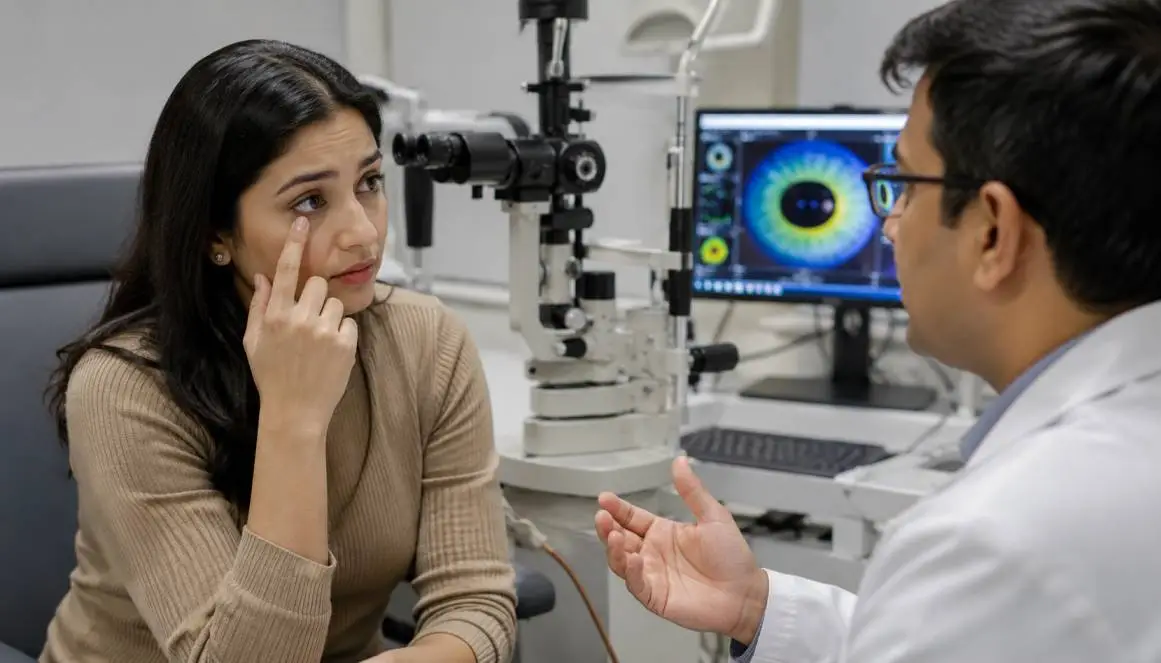
Get freedom from your glasses through advanced SMILE Pro technology which is safe and precise. Live life without limits!
Check your eligibility for SMILE Pro
- +91 8065380409