
What Causes Bulging or Sunken Eyes?
Eyes that look unusually prominent or unusually hollow are both signs worth paying attention to, not just cosmetic quirks. Bulging eyes are most often linked to thyroid problems. Sunken eyes are usually about aging, weight change, or fluid loss, though trauma and certain medical conditions can cause it too. Both can occasionally point to something more serious.


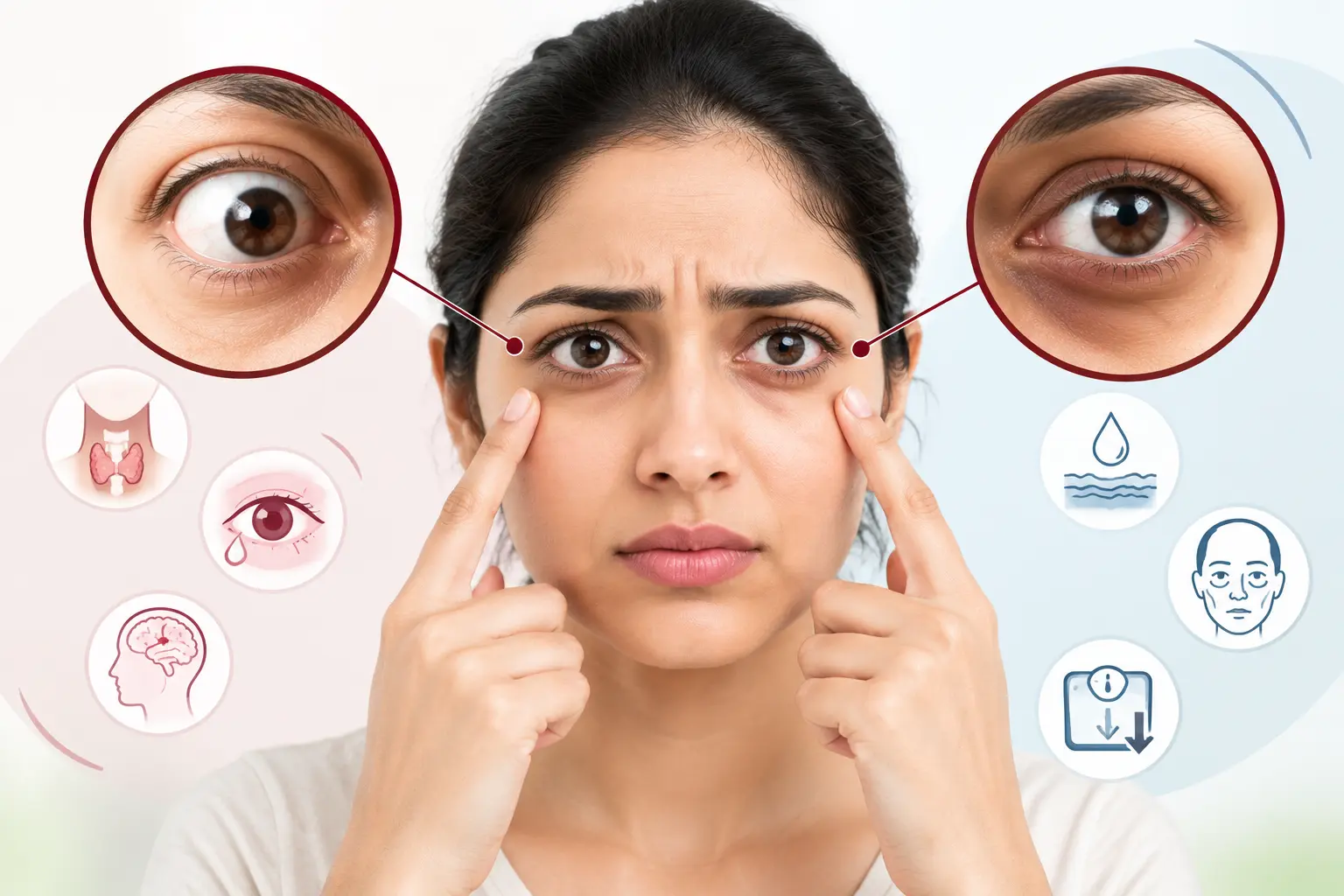
Table of Contents
Bulging eyes (proptosis or exophthalmos) are most commonly caused by thyroid eye disease linked to Graves' disease, though trauma, infection, and orbital tumors are less common causes. Sunken eyes (enophthalmos) are usually caused by aging-related fat loss, dehydration, weight loss, or an orbital bone fracture. Sudden changes in either direction, especially with pain, vision changes, or double vision, need prompt medical evaluation rather than home remedies.
Bulging Eyes vs. Sunken Eyes: Quick Comparison
Bulging Eyes (Proptosis/Exophthalmos) | Sunken Eyes (Enophthalmos) | |
What it looks like | Eye pushed forward, more white visible | Eye recessed into the socket, hollow appearance |
Most common cause | Thyroid eye disease (Graves' disease) | Aging, dehydration, weight loss |
Usually one eye or both | Often both, sometimes one | Often one if from trauma, both if systemic |
Onset | Usually gradual over months | Gradual (aging) or sudden (trauma, illness) |
Serious causes to rule out | Orbital tumor, infection, bleeding | Orbital fracture, tumor, severe dehydration |
What Causes Bulging Eyes?
Thyroid Eye Disease (Most Common Cause)
Thyroid eye disease, also called Graves' ophthalmopathy or Graves' orbitopathy, is the most common cause of bulging eyes in adults. It happens when the immune system, usually in the context of Graves' disease, attacks the muscles and fatty tissue around the eyes, causing them to swell and push the eyeball forward. It affects roughly one in three people with Graves'-related overactive thyroid, and it's more common in women aged 30 to 50 and in people who smoke.
Along with bulging, thyroid eye disease can cause:
- Redness in the white of the eye
- Double vision
- Dry, gritty eyes
- Puffy eyelids or eyelids that pull back
- Pain or pressure around the eyes
Other Causes of Bulging Eyes
Cause | Notes |
Orbital cellulitis (infection) | Most common cause of rapid bulging in children; needs urgent treatment |
Orbital tumors | Benign or malignant growths that push the eye forward |
Bleeding behind the eye | Usually from trauma |
Abnormal blood vessels behind the eye | Less common, can cause pulsing bulge |
Orbital inflammatory disease | Non-infectious swelling of orbital tissue |
Childhood glaucoma | A rare cause; adult-onset glaucoma does not typically cause bulging |
Naturally prominent eyes, which some people are simply born with, are not the same as bulging eyes and are usually harmless. The difference is that true bulging eyes tend to develop or worsen over time and often come with other symptoms.
Are You the Right Candidate for LASIK?
Fill the form & we will tell you if LASIK is right for you. Its Free!
What Causes Sunken Eyes?
Common, Everyday Causes
- Aging. Fat around the eye socket naturally decreases with age, and skin around the eyes thins, both of which make eyes look more hollow.
- Dehydration. Inadequate fluid intake, or fluid loss from vomiting or diarrhea, can make the under-eye area look sunken.
- Weight loss. Rapid or significant weight loss reduces facial fat, including around the eyes.
- Poor sleep. Doesn't directly cause true enophthalmos, but poor sleep worsens the appearance of hollowness and dark circles.
- Genetics. Some people are simply more prone to a hollow under-eye appearance.
Medical Causes (True Enophthalmos)
Cause | Notes |
Orbital fracture | Common after trauma such as a fall, fight, or car accident; often affects one eye |
Silent sinus syndrome | Rare condition where a collapsed sinus pulls the orbital floor down |
Horner's syndrome | A nerve condition that can cause a subtly sunken-looking eye |
Orbital surgery | Can alter eye socket volume |
Severe or chronic illness | Including advanced cancer and some autoimmune conditions |
Severe dehydration | Especially relevant in children (see red flag section below) |
An Important Red Flag Most Articles Miss: Sunken Eyes in Children
Sunken eyes are a recognized clinical sign of dehydration in children, used in the World Health Organization's guidelines for assessing dehydration from illnesses like gastroenteritis. If a child has sunken eyes along with reduced urination, unusual sleepiness or irritability, or reluctance to drink, this can indicate significant dehydration and needs medical attention rather than home management. This is different from the gradual, cosmetic sunken-eye appearance seen in adults from aging or mild dehydration.
How Are These Diagnosed?
For both conditions, a doctor typically starts with a physical eye exam and a detailed history, including how quickly the change happened and whether one or both eyes are affected. Depending on findings, further tests may include:
- Blood tests to check thyroid function (for suspected thyroid eye disease)
- Imaging such as CT or MRI to look at the orbit, sinuses, or optic nerve
- Measurement of how far the eye protrudes or recedes (exophthalmometry)
- Referral to an endocrinologist if thyroid disease is suspected, or an ENT specialist if a sinus cause is suspected for sunken eyes
Treatment and Management
Treatment depends entirely on the underlying cause, there's no single fix for either condition.
Underlying Cause | General Treatment Approach |
Thyroid eye disease | Managing thyroid levels, anti-inflammatory treatment, sometimes eye-specific therapy or surgery in significant cases |
Orbital infection | Antibiotics, urgent care |
Orbital tumor | Depends on type; may involve imaging, biopsy, and specialist referral |
Orbital fracture | May resolve with monitoring or need surgical repair depending on severity |
Aging-related sunken eyes | Often addressed cosmetically once medical causes are ruled out |
Dehydration | Fluid replacement; in children, medical assessment of severity |
Smoking cessation is specifically recommended for anyone with thyroid eye disease, since smoking is linked to worse progression of the condition.
When to See a Doctor
See a doctor if you notice bulging or sunken eyes that:
- Develop gradually but are new or progressive
- Affect only one eye, or one eye more than the other
- Come with double vision, pain, or reduced vision
Seek urgent care if you have:
- Sudden bulging, especially with pain, redness, or fever (possible infection)
- Sudden vision loss or significant vision change
- A recent injury to the eye or face followed by a sunken or bulging appearance
- In a child: sunken eyes along with lethargy, reduced urination, or refusal to drink
People Also Ask
What is the medical term for bulging eyes?
Proptosis or exophthalmos. Exophthalmos is typically used when the cause is thyroid-related.
What is the medical term for sunken eyes?
Enophthalmos
Can stress cause bulging or sunken eyes?
Stress itself doesn't directly cause either condition, though stress-related sleep loss and appetite changes can make sunken eyes look more pronounced.
Is it normal for eyes to look more sunken as you age?
Yes, some hollowing with age is common due to natural fat and skin changes. A sudden or one-sided change is not typical of ordinary aging and is worth checking.
Can dehydration alone cause bulging eyes?
No. Dehydration is a recognized cause of sunken-looking eyes, not bulging eyes.
Does thyroid disease always cause bulging eyes?
No. Not everyone with a thyroid condition develops eye involvement, and it doesn't always affect both eyes to the same degree.
Can bulging eyes affect vision?
Yes, in some cases. Severe swelling can press on the optic nerve, which can affect vision if not treated. This is uncommon but is why prompt evaluation matters.
Are bulging eyes always related to Graves' disease?
It's the most common cause, but not the only one. Infections, tumors, and trauma can also cause bulging eyes.
Can one eye be sunken and not the other?
Yes, especially after trauma or an orbital fracture, or with conditions like Horner's syndrome.
How long does it take for thyroid eye disease symptoms to improve?
Many symptoms improve over time, though this can take a year or more, and outcomes vary by individual.

Dry Eye After LASIK: Causes, Treatments & Long-Term Care
Dry eye after LASIK is a common and usually temporary side effect caused by temporary nerve disruption in the cornea, and it can be effectively managed with proper treatment and long-term eye care.

What Does 6/6 or 6/12 Vision Mean?
6/6 means normal vision. 6/12 means reduced clarity—you see at 6m what a person with normal sight sees at 12m.

Is Laser Eye Treatment Safe for Athletes?
Laser eye surgery is safe for most athletes—with the right procedure and timing. Find out what works best for your sport.