
Do Contact Lenses Expire?
Yes, contact lenses do expire. Even an unopened, sealed box has a printed expiration date, because contact lenses are regulated as medical devices, and manufacturers can only guarantee sterility and lens performance up to that date. Wearing expired lenses — even if they look completely fine — raises your risk of eye irritation, infection, and in rare but serious cases, corneal damage.

Medically Reviewed By:
Dr Advaith Sai Alampur
Leading LASIK & Refractive Surgery Expert
Condition:
Myopia
(Near sightedness)
Treatment:
LASIK
(Laser Eye Surgery)

Table of Contents
Quick Answer
Contact lenses expire because manufacturers can only guarantee the sterility of the packaging and the stability of the lens material up to a tested date, typically several years from manufacture. This applies even to unopened boxes. Separately, once you open a lens, you must also follow its replacement schedule (daily, bi-weekly, or monthly) — that's a different timeline from the printed expiration date. Wearing expired lenses can increase infection risk, so the safest rule is simple: if the expiration date has passed, don't use them.
Why Do Contact Lenses Have an Expiration Date?
- Contact lenses are classified as medical devices by regulatory bodies like the US FDA, so they're held to sterility and stability testing requirements.
- Each sealed lens sits in a small amount of sterile saline solution — over time, that sterility and the lens material itself can't be guaranteed indefinitely.
- Manufacturers determine expiration dates through stability testing on the lens material and the package's ability to maintain sterility.
- An expired lens may look completely normal — appearance is not a reliable way to judge whether it's still safe to use.
Expiration Date vs Replacement Schedule: Don't Confuse the Two
This is the single most common point of confusion, so it deserves its own section.
Expiration Date | Replacement Schedule | |
What it means | The last date the manufacturer guarantees the sealed, unopened lens is sterile and stable | How long you can wear a lens after opening it (e.g., daily, bi-weekly, monthly) |
Applies to | Unopened lenses in original packaging | Opened lenses currently in use |
Printed where | On the box and individual blister pack | Part of your prescription/lens type instructions |
Example | A box expires 2028, but you opened a lens in 2026 | A monthly lens must be discarded after 30 days of wear, regardless of the box's expiration date |
A lens can be "in date" on the box but still need to be thrown away because you've worn it past its individual replacement schedule — and vice versa, an unopened lens still in date can't be worn if the box itself has expired.
Typical Shelf Life by Lens Type
Lens Type | Typical Unopened Shelf Life | Notes |
Daily disposables | Roughly 1–4 years from manufacture | Designed for single use once opened, regardless of shelf life remaining |
Bi-weekly/weekly lenses | Roughly 2–4 years from manufacture | Require daily cleaning and proper case storage between wears |
Monthly lenses | Roughly 2–4 years from manufacture | Must be discarded one month after opening, even if the box hasn't expired |
Specialty lenses (astigmatism, presbyopia, colour) | Varies by material and design | Some specialty lenses may have shorter shelf lives — check individual packaging |
Exact shelf life varies by brand and lens material — always check the specific date printed on your box and blister pack rather than relying on general ranges.
Are You the Right Candidate for LASIK?
Fill the form & we will tell you if LASIK is right for you. Its Free!
Does Contact Lens Solution Expire Too?
Yes — and this is a separate, equally important expiration to track.
- Solution bottles have their own printed expiration date, which should never be used past that point.
- The FDA has also recommended that solution manufacturers add a "discard date" — the date to throw out the bottle after it's been opened, commonly around 90 days, though this varies by product.
- Never top off old solution in your case with fresh solution — this doesn't restore sterility.
- Contact lens cases themselves should be replaced regularly (commonly recommended at least three times a year, or as advised by your eye doctor).
What Happens If You Wear Expired Contacts?
Possible Effect | Why It Happens |
Eye irritation, redness, burning | Chemical breakdown of the lens material or degraded solution |
Increased infection risk | Package/solution sterility is no longer guaranteed past the expiration date |
Blurry vision | Lens material can dry out and lose its intended shape or flexibility |
Corneal complications | In rare, more serious cases, prolonged use of compromised lenses can contribute to corneal issues |
Symptoms don't always appear immediately, and an expired lens can look and feel normal at first — which is exactly why relying on the printed date, not appearance, matters.
How to Store Contact Lenses Properly (to Protect Shelf Life)
- Store unopened boxes at room temperature, away from direct sunlight and humidity
- Avoid storing lenses in bathrooms where temperature and humidity fluctuate near sinks and showers
- Keep opened lens cases tightly closed and use fresh solution each time — never reused or "topped off"
- Replace your lens case regularly, not just when it looks worn
- Check both the box and individual blister pack date before opening a new lens, since they should match but are worth confirming
When Should You Check With Your Eye Doctor?
- You're unsure whether a lens or solution has expired and want clarity before use
- You've experienced any redness, irritation, or blurry vision after wearing lenses, expired or not
- Your contact lens prescription itself may need renewal — in the US, contact lens prescriptions generally expire after one year (or as set by state law, whichever is longer)
- You're considering switching lens types or exploring long-term alternatives to daily contact lens wear
Seek prompt medical attention if you experience significant eye pain, sudden vision changes, light sensitivity with redness, or discharge after wearing any contact lens — these symptoms need timely evaluation and shouldn't wait.
Recent Research and Regulatory Notes
Regulatory guidance around contact lens and solution labeling continues to evolve, with ongoing attention to clearer expiration and discard-date labeling on packaging. Eye care professionals consistently emphasize that appearance alone is never a reliable indicator of a lens or solution's safety — sterility loss and material degradation aren't always visible. If you're unsure about current labeling requirements or a specific product's guidance, your eye care provider or the product's official packaging insert remains the most reliable source.
People Also Ask
Can I wear contact lenses a few months after they expire if they look fine?
No. Appearance doesn't indicate sterility or material stability — an expired lens can look completely normal while still carrying increased infection risk.
Do daily contact lenses expire faster than monthly lenses?
The unopened shelf life (the printed expiration date) is often similar across lens types, generally a few years from manufacture — but daily lenses must be discarded after a single use once opened, unlike monthly lenses.
Does contact lens solution really need to be thrown out after opening, even if it's not "expired" yet?
Yes — solution has both a printed expiration date and a separate "discard date" after opening (commonly around 90 days), and both should be followed.
Can expired contacts cause permanent eye damage?
In rare, more severe cases, complications like corneal issues can occur, though most reactions are milder irritation or infection risk — either way, expired lenses shouldn't be used, and any symptoms should be evaluated by an eye doctor.
How can I tell if my contact lens box has expired without opening it?
Check the printed expiration date directly on the box and on each individual blister pack — this is the only reliable way, since visual inspection of the sealed package isn't sufficient.
Do contact lens prescriptions expire, separate from the lenses themselves?
Yes — in the US, contact lens prescriptions generally expire after one year (or per state law if longer), which is separate from the shelf life of the lenses you've already purchased.
Is it safe to use contact lens solution past its discard date if the bottle isn't empty?
No — the discard date exists because sterility can't be guaranteed indefinitely after opening, regardless of how much solution remains.
Do colored or cosmetic contact lenses expire the same way as vision-correcting lenses?
Yes — cosmetic lenses are also regulated medical devices with printed expiration dates and carry similar or higher contamination risk if used past their date.

Can You Sleep With Contacts In?
Sleeping in contact lenses raises infection risk up to 8 times, per the CDC. Learn the real risks, warning signs, and what to do if it happens | Envision Lasik centre
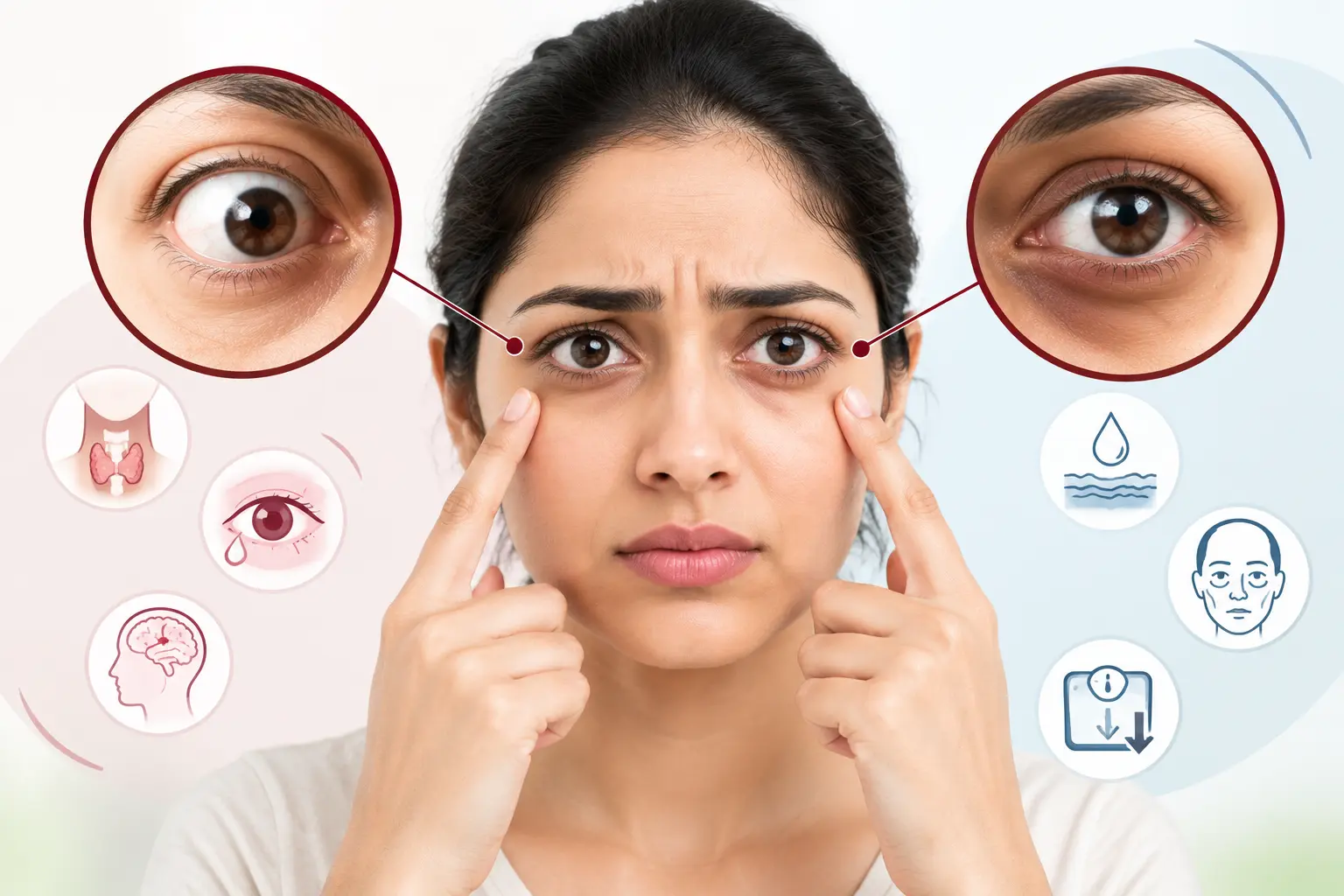
What Causes Bulging or Sunken Eyes?
Bulging eyes are often linked to thyroid disease, sunken eyes to aging or dehydration. Learn the real causes and red flags to watch for.
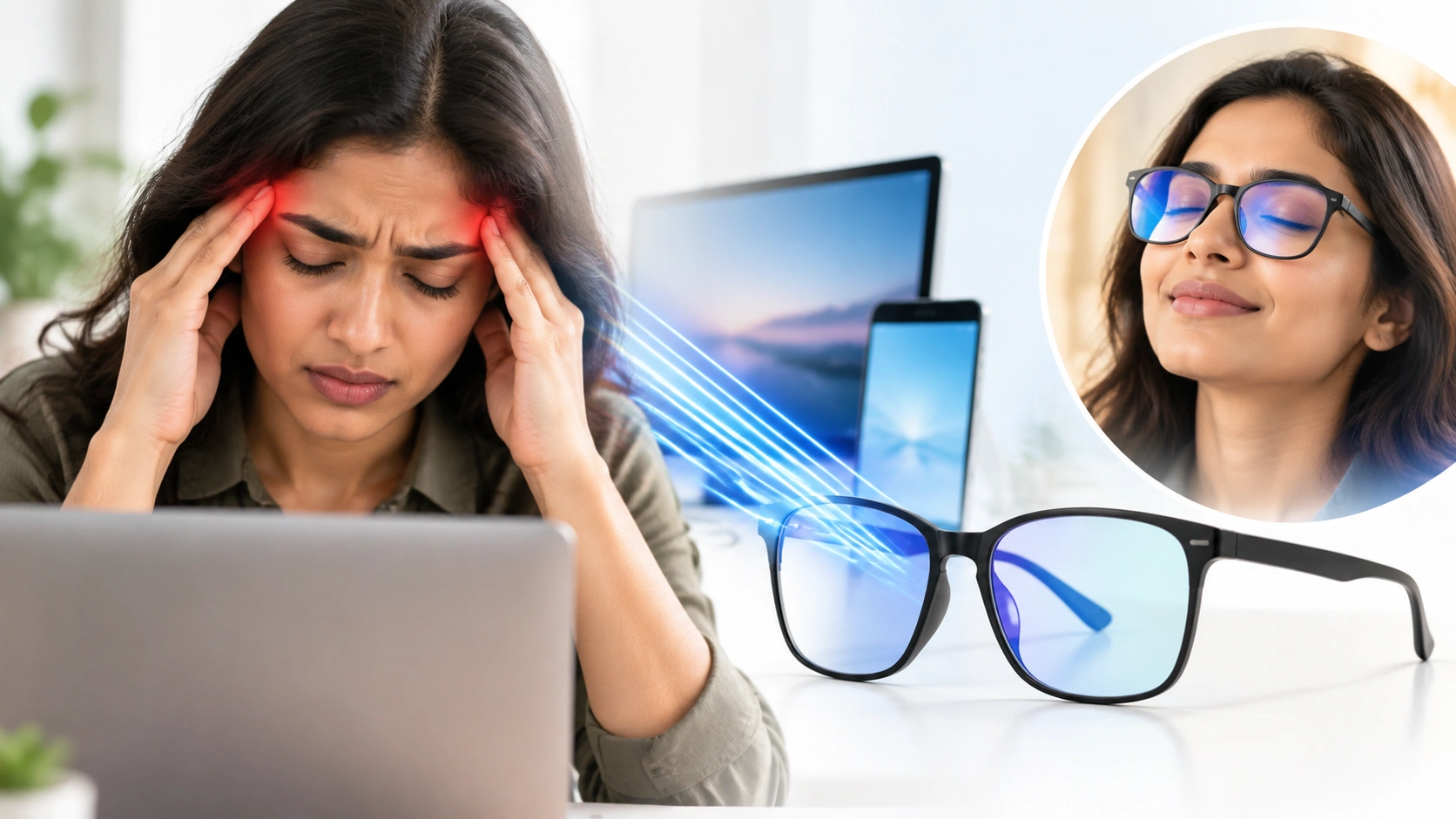
Can Blue Light Glasses Help With Headaches?
Blue light glasses are generally not proven to reduce digital eye strain or screen-related headaches, though some people find personal relief