
Can Blue Light Glasses Help With Headaches?
If you get headaches after long screen sessions, blue light glasses might seem like an easy fix. The honest answer, based on the best current evidence, is that they probably don't do what the marketing claims. What actually helps is treating the real cause of screen-related headaches, which is usually digital eye strain, not blue light itself.


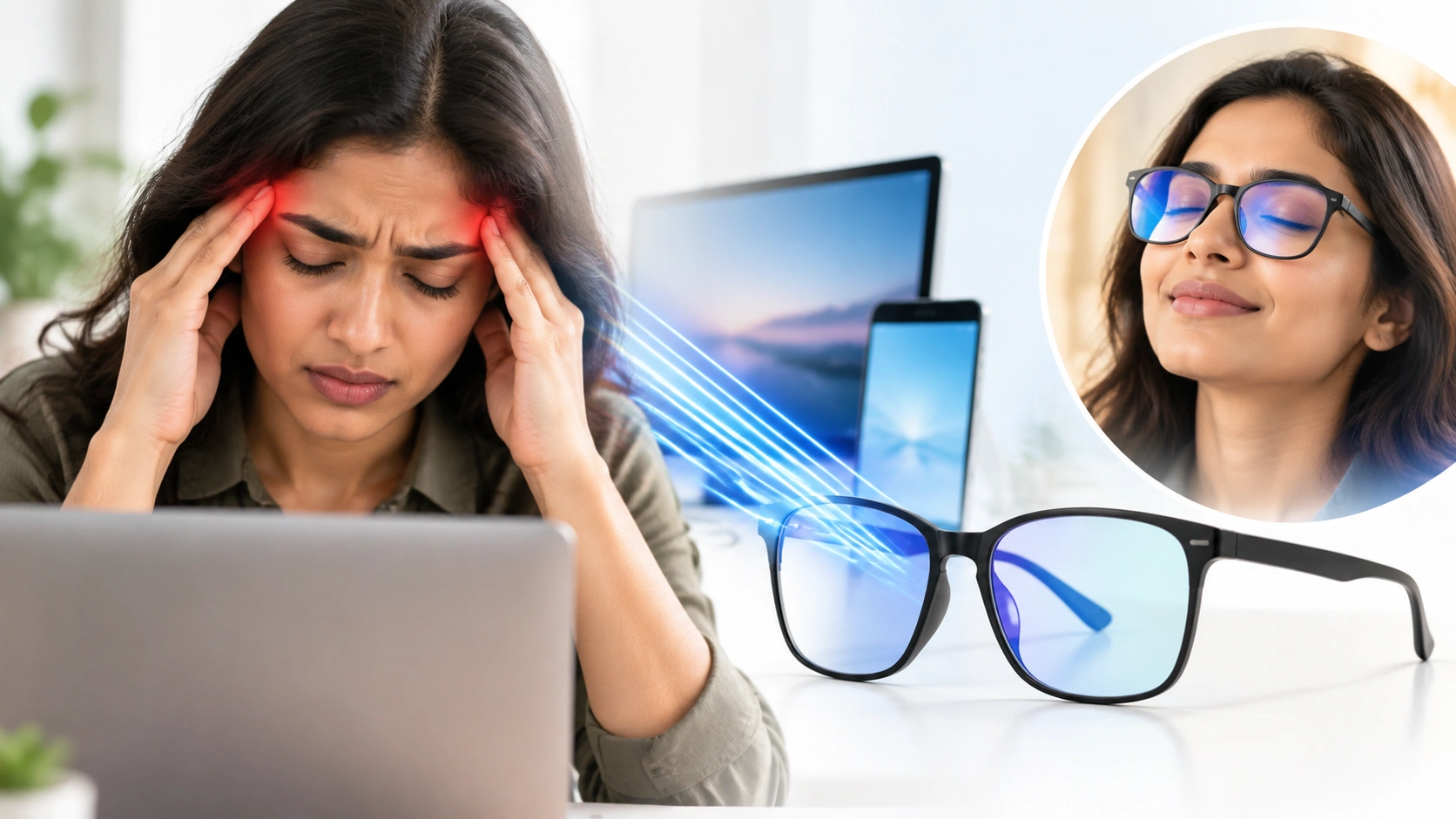
Table of Contents
The strongest evidence available, a 2023 Cochrane review of 17 randomized controlled trials, found no short-term benefit from blue light filtering lenses for eye strain, and the effect on headaches specifically wasn't established either way. Screen headaches are more often linked to how you use screens (uncorrected vision, poor posture, infrequent blinking, glare) than to blue light exposure. Fixing those usually helps more than switching lenses.
What Are Blue Light Glasses Supposed to Do?
Blue light glasses have lenses with a coating or tint designed to filter part of the blue light wavelength emitted by digital screens. The theory behind marketing them is that reducing blue light exposure reduces eye strain, headaches, and sleep disruption.
What Does the Evidence Actually Say?
This is where most articles on this topic oversell the product. Here's what a rigorous, independent review actually found.
A 2023 Cochrane systematic review, widely regarded as the highest standard in evidence-based healthcare, analyzed 17 randomized controlled trials covering 619 participants across six countries. It found there may be no short-term advantage to blue light filtering lenses for reducing visual fatigue from computer use compared to regular lenses. The effect on sleep quality was unclear, and no studies evaluated long-term retinal effects at all.
A few other points from the same review and related coverage are worth knowing:
- Blue light filtering lenses typically block only 10 to 25 percent of blue light from screens, and screen blue light exposure is a small fraction of what you get from natural daylight
- Adverse effects were rarely reported, but where they were, they included headache, discomfort wearing the glasses, and lower mood, meaning the evidence doesn't even reliably show a benefit for headache, let alone one that outweighs any downside
- Researchers noted these lenses have been prescribed since the early 2000s despite this gap in the evidence
In plain terms: there isn't good proof that blue light glasses relieve headaches. That doesn't mean nobody feels better wearing them, but it means you shouldn't count on them as your main fix.
Are You the Right Candidate for LASIK?
Fill the form & we will tell you if LASIK is right for you. Its Free!
So Why Do Screens Give You Headaches?
The more established explanation is digital eye strain, also called computer vision syndrome. This is a recognized cluster of symptoms from prolonged screen use, and headache is one of its most common complaints, alongside eye strain, blurred vision, dry eyes, and neck or shoulder pain.
Contributing Factor | Why It Causes Headaches |
Uncorrected or outdated vision prescription | Eyes work harder to focus, straining eye muscles |
Reduced blink rate | Screens cause you to blink less, drying and irritating the eyes |
Poor screen distance or angle | Forces awkward head and neck posture |
Glare or poor lighting | Increases squinting and visual effort |
Long, uninterrupted screen sessions | Sustained near-focus fatigues eye muscles over time |
Small text or low contrast | Makes the eyes work harder to resolve detail |
What Actually Helps (Backed by Evidence)
- Follow the 20-20-20 rule. Every 20 minutes, look at something 20 feet away for 20 seconds. This is a standard recommendation from optometric associations for reducing digital eye strain.
- Get your prescription checked. Even a small uncorrected refractive error, especially astigmatism, can worsen eye strain and headaches with screen use.
- Fix your screen distance and posture. Sit at a comfortable distance where you can read text clearly without leaning in, with your head and back supported.
- Improve lighting. Reduce glare and avoid working in a dim room lit only by your screen.
- Blink deliberately. Screen use reduces blink rate, which dries the eyes and adds to discomfort.
- Take real breaks. Step away from screens entirely, not just glance elsewhere, every hour or so.
Is It Ever Something More Than Eye Strain?
Usually screen-related headaches are mild, come on gradually, and ease once you stop looking at the screen. That pattern points to eye strain. Some patterns are worth getting checked rather than managed at home.
See a doctor if you have:
- Sudden, severe headache unlike your usual pattern
- Headache with vision changes, double vision, or loss of vision
- Headache with nausea, confusion, or slurred speech
- Headaches that are worsening in frequency or intensity over weeks
- Eye pain, not just general head discomfort
These aren't typical of simple digital eye strain and deserve a proper evaluation rather than a new pair of glasses.
Should You Still Buy Blue Light Glasses?
There's no strong evidence they help, but the evidence also doesn't show they're harmful for most people. If you already own a pair and feel more comfortable wearing them, there's no established reason to stop. The mistake is expecting them to fix a headache that's actually coming from an uncorrected prescription, poor screen habits, or something unrelated to blue light entirely, and not addressing the actual cause because you assumed the glasses would handle it.
If screen headaches are a regular problem, the more useful first step is an eye exam, not a new pair of tinted lenses. An exam can catch an uncorrected prescription, binocular vision issues, or dry eye, all of which are established, treatable causes of screen-related headaches. If you're also dealing with blurred vision or considering long-term vision correction, that's worth raising during the same visit.
Struggling With Headaches From Screen Time?
If headaches keep showing up after work or study on a screen, the most useful next step is a proper eye check, not another pair of tinted lenses. At Envision LASIK Centre, our specialists can check for uncorrected refractive error, binocular vision issues, and dry eye, the actual, evidence-backed causes behind most screen-related headaches, and recommend what will genuinely help, whether that's an updated prescription, dry eye management, or nothing more than a few habit changes.
Book a Consultation or call us at +91-9492820777
Frequently Asked Questions
Do blue light glasses really help with headaches?
There isn't good evidence that they do. The best available research found no short-term benefit for eye strain, and headache specifically wasn't shown to improve.
What's actually causing my screen headaches, then?
Most often it's digital eye strain, driven by an uncorrected prescription, screen distance, glare, reduced blinking, or posture, not blue light exposure itself.
Does blue light from screens damage your eyes?
Current research hasn't established that everyday screen blue light exposure causes eye damage. Reviews looking at retinal protection from blue light filtering lenses found no studies evaluating that outcome either way.
Is it worth buying blue light glasses anyway?
If you find them comfortable, there's no strong evidence they're harmful. Just don't rely on them as your only fix if headaches continue.
Can too much screen time cause headaches even with perfect vision?
Yes. Screen distance, lighting, posture, and reduced blink rate can all contribute regardless of whether you need a prescription
How long should I use screens before taking a break?
A commonly recommended guide is the 20-20-20 rule: every 20 minutes, look at something 20 feet away for 20 seconds.
Can an old glasses prescription cause headaches?
Yes. Even a small, outdated prescription can force your eyes to work harder, particularly with sustained close-up screen use, and headache is a common result.
Are children affected by screen-related headaches too?
Yes. Prolonged screen exposure in children has been associated with eye strain, headache, and irritability, so the same habits (breaks, distance, lighting) apply.
Do blue light glasses help with sleep instead of headaches?
The same 2023 Cochrane review found the effect on sleep quality was unclear, so this isn't well established either.
When should screen headaches worry me?
If headaches are sudden and severe, come with vision changes, or are steadily worsening over weeks, see a doctor rather than assuming it's just screen strain.

Dry Eye After LASIK: Causes, Treatments & Long-Term Care
Dry eye after LASIK is a common and usually temporary side effect caused by temporary nerve disruption in the cornea, and it can be effectively managed with proper treatment and long-term eye care.

What Does 6/6 or 6/12 Vision Mean?
6/6 means normal vision. 6/12 means reduced clarity—you see at 6m what a person with normal sight sees at 12m.

Is Laser Eye Treatment Safe for Athletes?
Laser eye surgery is safe for most athletes—with the right procedure and timing. Find out what works best for your sport.